


Free Things to Do in New Orleans (That Still Feel Like the “Real” Trip)
New Orleans has a way of making you feel like you’ve stepped into a living soundtrack. Even when you’re not spending much, the city keeps offering these little, cinematic moments: a brass band rounding a corner at the exact right time, the smell of beignets drifting through humid air, a porch conversation that turns into a story you’ll repeat for years. If you’re trying to keep your budget under control, the good news is that New Orleans is packed with experiences that don’t require a ticket—just curiosity, comfortable shoes, and a willingness to wander slowly.
What makes free New Orleans special isn’t only that you can fill an itinerary without opening your wallet. It’s that the city’s “must-feel” experiences—music in the streets, architecture that begs for a closer look, riverfront sunsets, oak-shaded parks, galleries throwing their doors open—are often the ones that cost nothing. The trick is knowing where to go, what to time, and how to make the most of it without accidentally turning your “free day” into a day of costly Ubers and impulse decisions.
This guide is built for travelers who want the authentic version of the city: the places where locals actually spend their afternoons, the streets where the magic happens naturally, and the cultural institutions that believe access should be open. I’ll also share a few optional, paid upgrades in a gentle way (only where they truly add value), because sometimes one small splurge can make the free moments even better.
Free Things to Do in New Orleans – Index
- 1. The Free New Orleans Mindset
- 2. Best Free Things to Do in the French Quarter
- 3. Free Riverfront Walks & Outdoor Spaces
- 4. Parks & Green Spaces That Feel Like a Retreat
- 5. Free Art, Museums & Cultural Experiences
- 6. Free Festivals & Seasonal Events
- 7. Neighborhood Walks & Local Experiences
- 8. Smart Planning for a Full Free Day
- 9. AIREVO Tips: How to Make Free New Orleans Feel Premium
- 10. FAQs About Free Things to Do in New Orleans
The Free New Orleans Mindset
Start With the Free New Orleans Mindset: Walk, Linger, Repeat
New Orleans rewards people who treat the city like a slow read instead of a checklist. If you try to “do everything,” you’ll burn through money on transportation and miss the tiny details that make the city feel alive. The most budget-friendly approach is also the most New Orleans approach: pick a neighborhood, walk it deeply, and let the day unfold.
Plan your morning around cooler hours, especially if you’re visiting in late spring or summer. A long, shaded walk through the Quarter or the Garden District early in the day feels completely different than the same route at 2 p.m. when the sidewalks glow. Then let your afternoons pivot toward parks, galleries, or river views, where you can reset your energy without paying for entertainment.
If you’re arriving from abroad, one practical thing that helps you keep costs down is staying connected without hunting for SIM cards or relying on spotty café Wi-Fi. A travel eSIM can quietly remove friction—navigation, transit checks, festival schedules, last-minute rain radar—and helps you avoid “oops” roaming charges. If you want a simple setup before you land, you can use an Airalo eSIM and treat it like a small investment in a smoother, cheaper trip overall.
Best Free Things to Do in the French Quarter
The French Quarter for Free: The Classic Scenes, Without the Tourist Trap Feeling
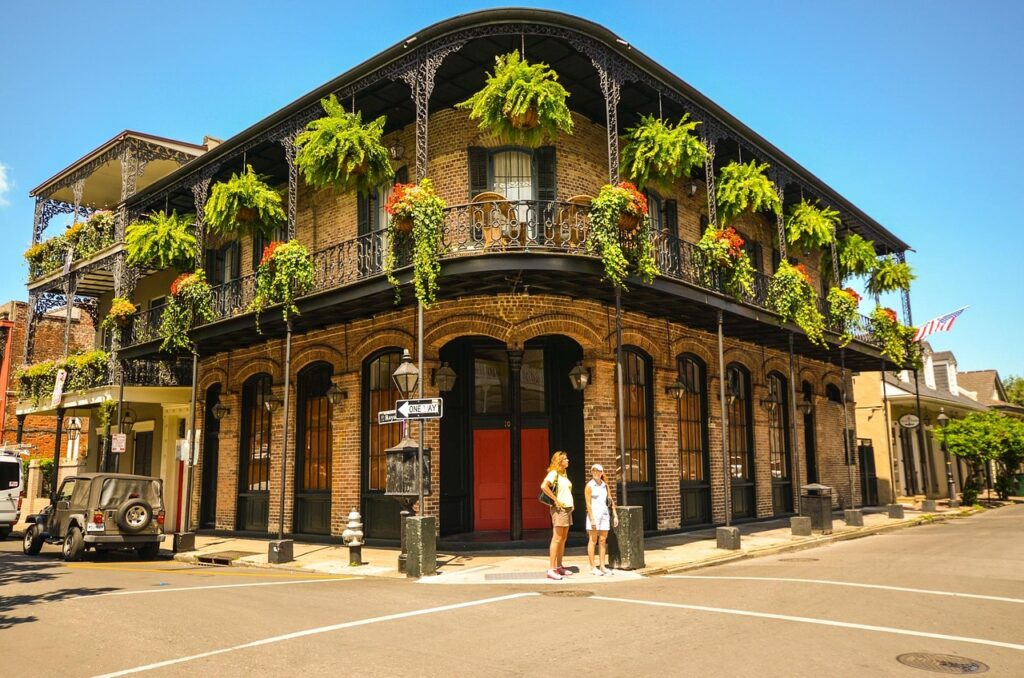
The French Quarter is where first-timers naturally drift, and yes, it can be expensive if you let it. But it’s also one of the best places in the city to experience New Orleans at full volume for free—if you focus on the street-level culture rather than the souvenir economy.
Jackson Square: The City’s Outdoor Living Room
Jackson Square is the kind of place where you can spend an hour and accidentally spend three. The scene changes by the minute: artists setting up along the iron fence, tarot readers and portraitists calling softly to passersby, a street performer drawing a semicircle of delighted strangers. The square works because it’s both iconic and genuinely lived-in—you’re not watching a show that was staged for tourists; you’re watching a city do what it does best, out in the open.
Come in the morning for calmer light and fewer crowds, then return near sunset when the energy thickens and the cathedral glow starts to feel theatrical. Sit on a bench, watch the sketch artists work, and notice how often people smile at strangers here. If you want a deeper understanding of what you’re looking at—without committing to a pricey group tour—one of the best “light upgrades” is a self-guided audio walk. A WeGoTrip audio tour can add context to the Quarter’s architecture and layered history while still letting you move at your own pace.
St. Louis Cathedral: A Quiet Pause in the Middle of the Noise
Right next to the square, St. Louis Cathedral is a natural “free stop,” but it’s also something more: a breath. Even if you’re not someone who chases churches on every trip, it’s worth stepping inside for a few minutes. The temperature shifts, the sound drops, and suddenly the Quarter feels like it belongs to another century. The contrast is part of the experience—outside is music and motion; inside is stillness and candlelight.
The cathedral is also a good reminder of how New Orleans doesn’t separate the sacred from the everyday. The city wears its history right on the street, and you can sense it in the way people drift in and out without making a big production of it.
Royal Street Window-Shopping: The Free Museum You Walk Through
Bourbon Street gets the headlines, but Royal Street is where you go when you want the Quarter to feel elegant. Even if you don’t buy a thing, wandering Royal is a genuinely good afternoon: antique storefronts, art galleries, courtyards you can glimpse through half-open gates, and that particular New Orleans visual rhythm of wrought iron and soft pastel walls.
Treat it like a “slow gallery crawl.” Pause at the frames, peek into courtyards, follow the sound of a violinist playing under a balcony. You’re not trying to cover distance; you’re collecting moments.
Frenchmen Street: The Music You Don’t Need a Ticket For
If you want to feel New Orleans music culture without paying a cover charge, Frenchmen Street is your friend. Many venues have paid entry at certain times, but the street itself often delivers the magic for free: musicians playing outside, crowds forming naturally, that feeling of being pulled forward by a trumpet line you didn’t expect to hear tonight. New Orleans & Company highlights Frenchmen as a key street for visitors, and it’s popular precisely because live music spills into the open air.
The best way to experience Frenchmen on a budget is to treat the sidewalk as your venue. Walk slowly, listen for the band that grabs you, and linger where the vibe feels right. If you end up wanting a “proper” sit-down set later, you’ll already know which sound you want to spend money on—and which you don’t.
Free Riverfront Walks & Outdoor Spaces
The Riverfront: Free Views That Feel Expensive
New Orleans is a river city, and the Mississippi is not a background feature—it’s a presence. Spending time along the riverfront is one of the simplest ways to feel grounded in the city’s geography, and it costs nothing except a little time and attention.
Woldenberg Park and the Moonwalk: An Easy, Iconic Stroll
Near the Quarter, the riverfront walk is an easy win. The breeze off the water can be a relief on warm days, and you’ll often find street performers, small gatherings, and people just doing their evening loop. The view of boats sliding past has a calming effect, like watching a slow parade that never ends.
This is also a smart place to schedule your sunset. New Orleans sunsets can be dramatic, especially when the sky decides to go full cotton-candy over the water. If you’re traveling with someone and you want a romantic moment that doesn’t require reservations, this is one of the most reliable choices in the city.
Crescent Park: The “Locals’ Riverfront” Feeling
For a riverfront experience that feels more neighborhood than tourist corridor, Crescent Park is a great bet. It’s the kind of place where you’ll see joggers, families, cyclists, and people sitting quietly with a drink, watching the light change. The views are wide, and you get a different angle on the city’s relationship with the river—less “postcard,” more “real life.”
Because it’s more spread out, it’s also easier to find your own pocket of space here. Bring water, go near golden hour, and let the city soften around you.
Parks & Green Spaces That Feel Like a Retreat
New Orleans City Park is one of those places that can reset your whole trip. If the Quarter starts to feel intense, or if you’ve been walking in heat and noise for days, City Park feels like the city exhaling. You’ll find huge live oaks that look ancient enough to have their own mythology, long paths that invite slow wandering, and enough open space to make you forget you’re in a major city.
The Besthoff Sculpture Garden: World-Class Art, Free Admission
One of the most impressive “free” cultural experiences in New Orleans is the Sydney and Walda Besthoff Sculpture Garden, connected to the New Orleans Museum of Art campus. Admission is free, and it’s designed for wandering: modern and contemporary sculptures placed in a landscape that makes the art feel alive rather than isolated. The garden’s official info confirms the free admission and provides seasonal hours, which is useful when you’re planning around daylight or heat.
If you’re trying to pack your itinerary with meaningful experiences without the constant spend, this is the kind of place that feels like you “hacked” the city in the best way. It’s calm, beautiful, genuinely high quality, and perfect for travelers who like culture but don’t always want to be indoors.
The Simple City Park Afternoon: Oaks, Lagoons, and a Slower Tempo
Even without any “named” attractions, City Park is worth it. Pick a direction, follow a path, stop when something looks inviting. The park gives you permission to do nothing—and in New Orleans, doing nothing can feel like doing something, because the atmosphere is so rich.
Free Art, Museums & Cultural Experiences
The Historic New Orleans Collection: A Museum-Level Experience for Free
If you want a cultural anchor that doesn’t cost anything, the Historic New Orleans Collection is one of the best answers in the city. Admission is free, though tickets are required, and the museum covers exhibitions that help you understand New Orleans beyond the surface-level myths. Their official visitor info confirms the free admission and the ticketing requirement, which is worth knowing so you don’t arrive and feel surprised.
This is a perfect midday stop when the heat peaks. You step inside, cool down, and come out with a clearer sense of how the city became what it is. Even if you only spend an hour, you’ll probably walk out with a sharper eye for the details you’ll notice later on the street.
Free Art Nights: The First Saturday Art Walk on Julia Street
New Orleans doesn’t lock art behind velvet ropes as much as people assume. One of the best examples is the First Saturday Art Walk in the Arts District, centered around Julia Street. Many galleries open their doors with receptions that feel welcoming rather than intimidating, and it’s an easy way to spend an evening without paying for entertainment. The Arts District New Orleans event listing describes it as happening every first Saturday of the month around Julia Street.
The vibe here is different from the French Quarter’s theatrical energy. It’s more “talk to strangers about a painting,” more relaxed, more local. Even if you’re not an art expert, you can enjoy the atmosphere: good lighting, open doors, people wandering in small groups, that sense that the city is giving you access to something real.
Free Festivals & Seasonal Events
New Orleans is a festival city, and not all festivals come with a ticket price. The big advantage for budget travelers is that some of the most beloved events are designed to be accessible.
French Quarter Festival: A Major Free Music Festival
French Quarter Festival is one of the best-known examples: multiple days of music and food vendors, with free attendance. The festival’s official FAQ explicitly states that it’s free to attend, which is the kind of detail that helps you plan confidently.
Because festivals can change layouts and policies from year to year, treat the official site as your final reference for schedules and rules. But as a concept for budget travel, it’s huge: you can build an entire New Orleans trip around a free festival and spend your money only on what you choose, like one special meal or a paid show you truly care about.
The “Check the Calendar” Strategy That Saves You Money
Even if you’re not visiting during French Quarter Festival, the larger strategy matters: always check what’s happening for free during your travel dates. New Orleans has free concerts, neighborhood events, and cultural celebrations that pop up around the calendar, and aligning even one day with a free event can transform your trip.
If you want to layer in one paid activity on a festival trip—something like a cooking class, a swamp experience, or a curated cultural activity—keep it intentional and singular, so it feels like a highlight rather than a budget leak. When you want to browse options in one place (and compare times and availability), you can check Klook for activities that fit your exact schedule.
Mardi Gras: One of the World’s Biggest Free Street Celebrations
Mardi Gras is one of the most famous celebrations in the world, and what many first-time visitors don’t realize is that its core experience is completely free. Watching the parades, catching throws, and soaking up the atmosphere along public routes costs nothing at all. Neighborhoods across the city—from Uptown to Mid-City and parts of the French Quarter—turn into open-air stages where the city celebrates together, making it one of the most accessible large-scale festivals you can experience anywhere.
What makes Mardi Gras especially special for budget-conscious travelers is that you don’t need tickets, reservations, or insider access to enjoy it. The magic happens on the streets: marching bands, elaborately designed floats, handmade costumes, and spontaneous moments that feel uniquely New Orleans. Locals bring folding chairs, snacks, and a relaxed patience, treating the parades as community gatherings rather than spectacles behind barriers.
It’s worth noting that while Mardi Gras can drive up hotel prices and crowd levels, the free experiences themselves remain the heart of the celebration. With smart planning—choosing parade routes carefully, walking between neighborhoods, and avoiding unnecessary transportation—you can experience one of the world’s great cultural events without spending money on attractions, proving that in New Orleans, some of the biggest moments really are free.
Neighborhood Walks & Local Experiences
The Garden District: Architecture, Shade, and Storybook Streets for Free
The Garden District feels like a different New Orleans: quieter, greener, more residential, and filled with the kind of architecture that makes you slow down without trying. The best way to experience it is on foot. Let yourself drift past mansions and smaller cottages, notice the ironwork details, listen for wind moving through the trees. Even if you’ve seen photos, the lived-in beauty of these streets is different in person.
This neighborhood is also a reminder that New Orleans history isn’t just “old buildings.” It’s layered social history, changing fortunes, families, storms, rebuilds, and a constant negotiation between preservation and real life. If you like to understand what you’re seeing rather than just photographing it, this is another moment where an audio guide can quietly elevate your walk without turning it into something rigid. A self-guided Garden District route through WeGoTrip can add context while still letting you stop whenever a porch swing or a flowering courtyard steals your attention.
The best way to experience Frenchmen on a budget is to treat the sidewalk as your venue. Walk slowly, listen for the band that grabs you, and linger where the vibe feels right. If you end up wanting a “proper” sit-down set later, you’ll already know which sound you want to spend money on—and which you don’t.
Free Neighborhood Wanders That Feel Like You Found Your Own New Orleans
Some of the best “free things” in New Orleans aren’t single attractions—they’re the feeling you get when you walk a neighborhood and realize you’re no longer just visiting. You’re participating.
Spend a morning in the Marigny when the streets feel sleepy and gentle, then drift toward music later. Wander the Bywater for street art and a more creative residential atmosphere, where the city feels like it’s constantly reinventing itself. Walk Magazine Street for the pleasure of movement and people-watching, even if you don’t buy anything. The point isn’t to cover the entire city. The point is to choose one area and let it unfold.
Smart Planning for a Full Free Day
Free Things for Rainy Days: New Orleans Still Works When the Sky Opens
Rain is part of the New Orleans personality. When it hits, you don’t have to surrender your day. Build a rainy-day plan around places that are free, indoors, and interesting: museums like the Historic New Orleans Collection, galleries in the Arts District, and even slow afternoons inside the Quarter where you treat the weather as part of the mood.
Free Planning That Prevents “Budget Creep”
Sometimes the most expensive part of a “free” day is the accidental stuff: paying extra for transportation because you got tired, buying water repeatedly because you didn’t bring any, or losing time and money because you couldn’t navigate efficiently. A little planning keeps the day feeling free.
If you’re flying in and you’re flexible with dates, comparing routes can make a meaningful difference. It’s worth checking with us for flight combinations and alternate airports that sometimes lower costs, especially if you’re planning around festival weekends when prices can spike.
If you’re road-tripping through Louisiana or adding nearby destinations, having a car can sometimes be cheaper than you expect when split between people—especially if it helps you avoid multiple rideshares per day. If that’s your style of trip, you can compare options through EconomyBookings and then structure your itinerary around neighborhoods and parks with easy parking rather than constant paid lots.
And if you arrive early or have a late departure, don’t let luggage force you into an expensive “wait it out” situation. Stashing bags for a few hours can effectively buy you an extra free day of walking. Radical Storage is a practical option for turning awkward travel timing into one more afternoon of exploring.
AIREVO Tips: How to Make Free New Orleans Feel Premium
New Orleans is one of those cities where your best moments often happen when you stop trying so hard. Give yourself permission to sit longer in Jackson Square than you planned. Follow the sound of music even if it takes you off your “route.” Let the riverfront be a real pause, not just a photo stop. If you treat the city like a conversation instead of a transaction, it will keep giving.
Also, try building your day around one anchor and one drift. Your anchor might be City Park and the Besthoff Sculpture Garden, because you know it’s worth it and it’s free. Your drift might be “walk until something interesting happens.” That combination prevents decision fatigue and keeps your spending intentional. Finally, remember that free doesn’t mean rushed. If you do fewer things, more deeply, New Orleans will feel richer—and your budget will thank you quietly.
If traveling smart and keeping costs under control is part of your style, it helps to zoom out and see how these ideas connect across destinations. Our Things to Do in New Orleans pillar guide brings together iconic highlights, cultural experiences, and flexible day-by-day ideas to help you plan beyond just free stops. And if Las Vegas is also on your radar, the Free Things to Do in Las Vegas guide shows how the same free-first mindset works in a completely different city—proving that unforgettable trips don’t have to revolve around constant spending, just better planning.
FAQs About Free Things to Do in New Orleans
Is New Orleans worth visiting if you’re traveling on a budget?
Yes. New Orleans is one of the most rewarding U.S. cities for budget travelers. Many of its most memorable experiences—live street music, historic neighborhoods, riverfront walks, public parks, and free museums—don’t require a ticket. With smart planning, you can experience the city’s culture and atmosphere without spending much money.
Can you spend a full day in New Orleans without paying for attractions?
Absolutely. A full free day can include exploring the French Quarter, spending time in Jackson Square, walking the riverfront, visiting City Park and the Besthoff Sculpture Garden, and enjoying live music on Frenchmen Street. Grouping activities by neighborhood helps avoid unnecessary transportation costs.
What are the best free things to do in the French Quarter?
Some of the best free experiences in the French Quarter include Jackson Square, St. Louis Cathedral, Royal Street window-shopping, street performances, and simply wandering the historic streets. These spots offer the classic New Orleans feel without requiring paid admission.
Is New Orleans a good destination for free live music?
Yes. New Orleans is famous for free live music, especially in areas like Frenchmen Street, Jackson Square, and during festivals such as French Quarter Festival. Music often spills into the streets, allowing visitors to enjoy performances without cover charges.
Are there free museums in New Orleans?
Yes. Several cultural institutions offer free admission, including the Historic New Orleans Collection and the Besthoff Sculpture Garden in City Park. These places provide museum-level experiences without an entry fee, making them ideal for budget-conscious travelers.
Are free attractions in New Orleans better during the day or at night?
Both have their appeal. Daytime is ideal for parks, architecture, museums, and neighborhood walks, while nighttime brings street music, riverfront sunsets, and lively atmospheres—especially in the French Quarter and Frenchmen Street. Mixing both creates a balanced, low-cost itinerary.
Do not miss our newest articles!
All Rights Reserved.
Made with 🧡 by Marc Guerrero.
Made with 🧡 by Marc Guerrero. All Rights Reserved | Affiliate Disclosure | Cookies Policy | Legal Notice | Privacy Policy | Terms & Conditions