
Atlanta in 3 Days: Complete Travel Guide
Atlanta is a city that reveals itself in layers. From the outside, it can look like a spread-out skyline stitched together by highways and trees. Then you arrive and realize the “trees” are an actual urban forest, the neighborhoods feel like small cities with their own accents, and the best moments happen when you stop trying to do Atlanta like a checklist and start letting it unfold: a BeltLine stroll that turns into patio hopping, a museum afternoon that becomes a conversation about civil rights and modern culture, a sunset view that makes you understand why locals love their skyline from a distance.
This 3-day guide is designed for first-timers who want the essentials—iconic attractions, local food energy, and the neighborhoods that make Atlanta feel alive—without spending the whole trip in transit. You’ll see downtown’s big hitters, spend time on the BeltLine where Atlanta feels most “right now,” and make space for history in a way that feels grounded and respectful. It’s also built to be flexible: Atlanta weather can shift, and your energy will too, so you’ll get smart “either/or” choices where it matters.
Atlanta in 3 Days – Index
- 1. Before You Go: The Atlanta Game Plan That Saves You Time
- 2. Day 1: Downtown Icons, Skyline Views, and an Easy First Night
- 3. Day 2: The BeltLine, Food Halls, and Atlanta’s Neighborhood Soul
- 4. Day 3: Civil Rights History, Museums, and a Strong Finish
- 5. Where to Stay for 3 Days in Atlanta
- 6. Getting Around: MARTA, Rideshares, and When a Car Helps
- 7. What to Eat and Drink in Atlanta Without Overplanning
- 8. AIREVO Tips About Atlanta in 3 Days
- 9. FAQs About Atlanta in 3 Days
Before You Go: The Atlanta Game Plan That Saves You Time
Atlanta can be surprisingly simple if you plan by “clusters” instead of pinpoints. Downtown and Centennial Olympic Park area work well as a first-day launchpad because attractions sit close together. The BeltLine’s Eastside Trail and nearby neighborhoods (Inman Park, Old Fourth Ward, Poncey-Highland) form another natural cluster where you can walk for hours without feeling like you’re “commuting” between experiences. Then there’s the civil rights corridor around the Martin Luther King, Jr. National Historical Park, where Atlanta’s story becomes personal and powerful. Mapping your days around these zones turns Atlanta from “spread out” into “smooth.”
If you’re flying in, your arrival time matters more than your airline. Landing early enough to claim a real first afternoon changes the whole rhythm—especially because Atlanta evenings can be the best part: patios, skyline glow, and the kind of warm-night energy that makes you want to stay out longer than planned. When you’re comparing routes, you can check flexible flight options through AIREVO and aim for an arrival that protects daylight.
And if you’re visiting from abroad, treat connectivity like part of your itinerary. Atlanta is easy to navigate when your maps load instantly, your ticket confirmations open without drama, and you’re not relying on spotty café Wi-Fi. An eSIM from Airalo is a small upgrade that tends to pay for itself the first time you reroute quickly, call a rideshare, or adjust plans because of weather.
Day 1: Downtown Icons, Skyline Views, and an Easy First Night
Start downtown where Atlanta’s “big attraction” energy is concentrated. The Centennial Olympic Park area is built for first-day momentum: you can get oriented, feel the city’s pace, and knock out one or two headline stops without burning time in transit. This is the day to choose an anchor attraction—something you’re genuinely excited about—then let everything else be secondary. If the Georgia Aquarium is on your list, it’s one of the city’s signature draws and pairs naturally with nearby sights. Many travelers also combine it with World of Coca-Cola for a classic “only in Atlanta” pairing, which is exactly why official city itineraries often group these downtown highlights together.
To make the day smoother, consider booking timed entry for anything that tends to line up. You don’t need to overbook your whole trip, but you also don’t want to donate your afternoon to a queue. If you like keeping your confirmations in one place, you can reserve popular Atlanta activities and tickets through Klook—especially helpful if you’re visiting on a weekend or during school breaks when downtown gets busy.
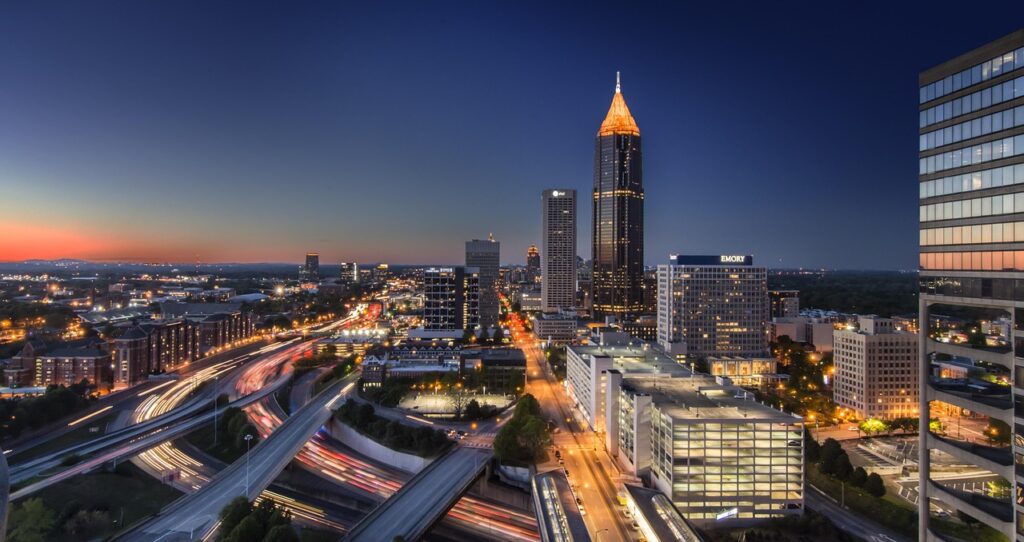
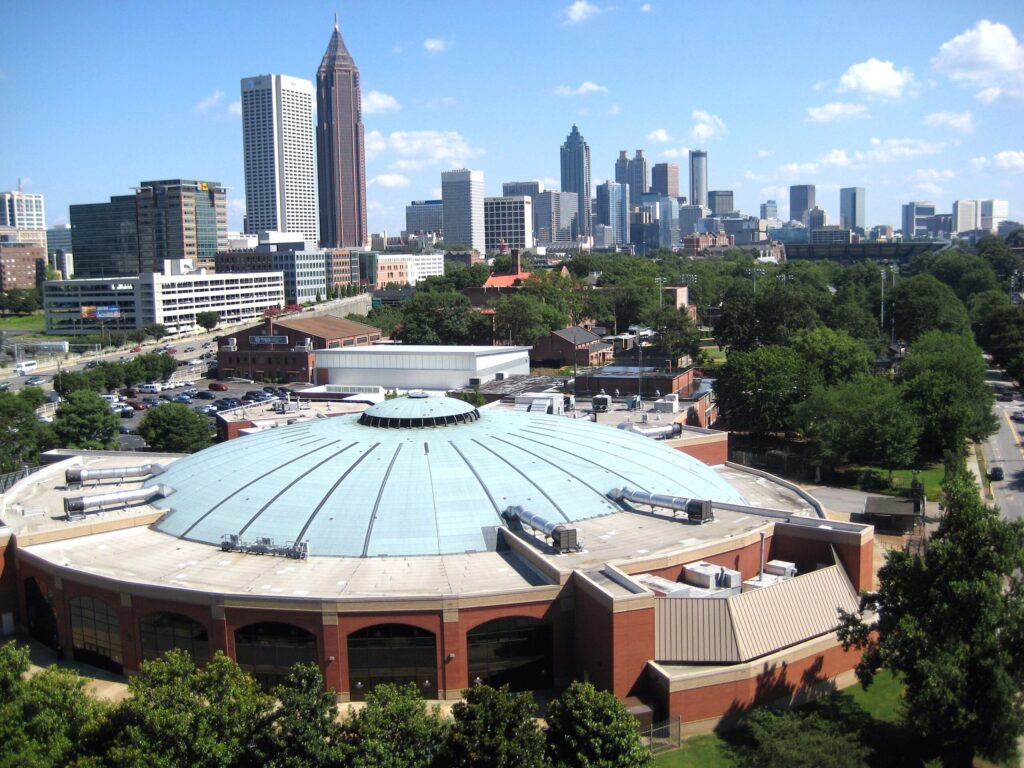
As the afternoon fades, give yourself a skyline moment. Atlanta’s skyline isn’t the kind you experience best from street-level canyons; it’s the kind that looks gorgeous when you step back and let it rise above the treeline. If you’re up for a short outing, head toward a viewpoint that feels effortless—something you can reach without turning it into a mission—and let the city settle into your memory while the lights start to appear. This is also your cue to keep dinner easy: pick something close to where you are, eat well, and save your “big food exploring” energy for the BeltLine tomorrow.
Day 2: The BeltLine, Food Halls, and Atlanta’s Neighborhood Soul
If Atlanta has a modern heartbeat, it’s the Atlanta BeltLine—especially the Eastside Trail, where the city feels walkable, social, and constantly in motion. This is where Atlanta stops feeling like “a place you drive through” and starts feeling like “a place you live in.” The Eastside Trail is built for strolling, biking, murals, and people-watching, with easy access to hubs like Ponce City Market and Krog Street Market. The BeltLine itself highlights how the trail connects you to food halls, public art, and neighborhood energy in a way that’s uniquely Atlanta.
Start the morning with the BeltLine at an unhurried pace. Walk a section, pause when something catches your eye, and don’t worry about “doing it all.” Atlanta rewards the day when you let it breathe. You’ll pass murals, patios, and that constant sense of local life: runners, dogs, coffee cups, friends meeting “on the trail” as if it’s their living room. If you like to explore with a bit of story in your ear—history, art, neighborhood context—this is a perfect time for a self-guided audio experience. A well-paced route can make the BeltLine and Old Fourth Ward feel more layered, and you can explore with a WeGoTrip audio walk in a way that stays flexible and personal.
Around midday, let food halls do the heavy lifting. Ponce City Market is the obvious choice because it’s right off the trail and can satisfy a group with different tastes without turning lunch into a logistical debate. Krog Street Market gives you a slightly different vibe—smaller, punchier, and great for grazing—so you can decide based on your mood and how crowded things feel. The most Atlanta way to do this day is to eat, wander, eat again, and accidentally turn a “short walk” into half a day.
As afternoon turns to evening, pick one neighborhood near the BeltLine and go deeper instead of hopping around. Inman Park can feel leafy and charming, Old Fourth Ward feels like the BeltLine’s creative engine, and Midtown gives you a more polished city energy with big green space nearby. If your feet still want movement, Piedmont Park is a natural reset—open sky, city views, and a calm that makes the evening feel longer.
Day 3: Civil Rights History, Museums, and a Strong Finish
Atlanta’s history is not optional background—it’s core to understanding the city. Dedicate your morning to the Martin Luther King, Jr. National Historical Park area and let the experience be both educational and emotional. This isn’t about rushing through landmarks; it’s about giving yourself the space to absorb what you’re seeing and how it connects to the present. The National Park Service notes the park is open daily (with specific holiday closures) and that ranger-led Birth Home presentations are free and first-come, first-served, which is exactly why arriving early tends to make the experience smoother.
What makes this area especially powerful is that it’s not just “a site,” it’s a corridor: historic Ebenezer Baptist Church, neighborhood streets that carry history in their bones, and a sense of proximity that makes the story feel real rather than distant. If you want your visit to feel guided without joining a big group, this is another moment where a carefully designed audio guide can help you move with intention. A self-paced WeGoTrip route can be a good fit here because you control the timing, the pauses, and the depth.
For your afternoon, choose a museum or two based on what you want to feel. If you want something that connects Atlanta’s civil rights legacy to broader themes, the National Center for Civil and Human Rights is often a meaningful next step (and is included among CityPASS option lists alongside other major attractions). If you want something more classic and “city-museum” in energy, you can pivot toward art, science, or natural history depending on your interests and the weather.
Finish the trip with a strong final evening that doesn’t feel rushed. A final BeltLine sunset stroll can be perfect if you want to close the trip where Atlanta felt most alive. Or, if you want something theatrical and distinctly “night out,” aim for a venue experience—music, performance, or a neighborhood dinner that feels like a celebration rather than a task.
Where to Stay for 3 Days in Atlanta
For a first visit, the best place to stay is wherever you’ll spend the least time fighting distance. Midtown is a strong all-around base: close to Piedmont Park, convenient for BeltLine-adjacent neighborhoods, and full of dining options that don’t require a big plan. Downtown can work well if your top priorities are the aquarium, stadium events, and a “hit the icons early” approach, but it often feels less charming at night unless you have a specific evening plan.
If your idea of a perfect Atlanta trip is BeltLine-first—walking, food halls, patios, and neighborhood exploring—consider staying near Old Fourth Ward, Inman Park, or along the Eastside Trail corridor. The pay-off is that you can step outside and be “in it” immediately instead of scheduling your enjoyment around traffic.
One more practical note: if you have a late checkout or you’re between hotels, Atlanta gets much easier when you’re not hauling bags through food halls and trails. Dropping luggage for a few hours with RadicalStorage can turn an awkward in-between day into a relaxed final adventure.
Getting Around: MARTA, Rideshares, and When a Car Helps
Atlanta is a hybrid city: part walkable pockets, part car-shaped reality. The good news is you don’t need to rent a car to have a great three days—especially if you’re staying in Midtown or Downtown and leaning into BeltLine neighborhoods. MARTA is useful for key corridors (including airport connections), and rideshares bridge the gaps when the weather turns or your energy dips. The trick is not trying to “walk Atlanta” like you would New York; instead, you walk the neighborhoods and trails that were built for walking, then you connect the clusters efficiently.
A rental car only becomes truly valuable if you’re adding a day trip outside the city or you want maximum flexibility late at night. If that’s your plan, comparing options through EconomyBookings can help you find a pickup that doesn’t eat your morning and a price that leaves room in your budget for better meals.
What to Eat and Drink in Atlanta Without Overplanning
Atlanta’s food scene is big, varied, and deeply local, but you don’t need a hyper-detailed list to eat well here. The simplest winning strategy is to let each day’s geography guide your meals. Downtown is good for straightforward convenience between attractions. The BeltLine corridor is where you’ll naturally eat best because the options are dense, walkable, and designed for lingering—patios, food halls, pop-ins that become “we should stay for one more.”
What makes Atlanta special is how quickly meals become experiences: you’re not just eating, you’re people-watching, listening to music drift across a patio, seeing neighborhoods change block by block. Plan one “nice” dinner where you’re willing to wait a little or reserve ahead, then keep the rest flexible. Atlanta’s best meals are often the ones you didn’t script.
AIREVO Tips About Atlanta in 3 Days
Atlanta gets easier when you stop trying to conquer it and start moving through it. Build your days around neighborhoods, not individual pins on a map, and you’ll spend more time enjoying and less time navigating. Downtown is great for iconic attractions, but the BeltLine is where the city feels most alive—so protect time for it, even if you’re only walking a short section and letting the afternoon unfold.
If you pre-book anything, focus on what protects your time. Timed entry for a headline attraction can save an entire afternoon, and a self-paced audio guide can add depth without locking you into a schedule. Otherwise, keep your plans loose enough that you can follow your energy—because Atlanta’s best moments often happen when you say yes to a patio, a mural detour, or “one more stop” at a food hall.
Finally, pack for comfort and flexibility. Atlanta can be hot and humid, and the most memorable days usually include a lot of walking—especially on the BeltLine. Comfortable shoes and breathable layers matter more than you’d think, and a small connectivity upgrade can make the whole trip feel smoother from the moment you land.
To keep planning without overstuffing your schedule, build your wishlist with our Things to Do in Atlanta guide, which goes deeper into neighborhoods, seasonal highlights, and experiences beyond this 3-day outline. And if you want Atlanta to feel incredible on a budget, our Free Things to Do in Atlanta post is packed with parks, viewpoints, BeltLine stretches, public art, and low-key local favorites that let you enjoy the city’s best vibe for $0.
FAQs About Atlanta in 3 Days
Is 3 days enough for Atlanta?
Yes—three days is enough to combine downtown icons, a full BeltLine/neighborhood day, and a meaningful civil rights + museum day, as long as you plan by clusters and don’t overschedule.
What’s the one area I shouldn’t miss?
The BeltLine’s Eastside Trail is the fastest way to feel Atlanta’s modern energy—public art, patios, food halls, and neighborhoods that are built for wandering.
Do I need a car for this itinerary?
Not necessarily. MARTA plus rideshares can cover most needs for a 3-day first-timer trip, especially if you stay in Midtown/Downtown and focus on BeltLine neighborhoods.
What should I prioritize downtown?
Pick one or two big attractions you truly care about (like the aquarium area) and leave buffer time for walking and meals, rather than stacking four timed experiences back-to-back.
How do I visit the Martin Luther King, Jr. site smoothly?
Arrive early. The NPS notes the park is open daily with specific closures, and ranger-led Birth Home presentations are free but first-come, first-served—so early timing helps.
Where should I spend my last evening?
If you loved the BeltLine vibe, return for a sunset stroll and a final dinner nearby. If you want a “big night out,” choose a performance or music venue and make the evening your closing celebration.
Do not miss our newest articles!
All Rights Reserved.
Made with 🧡 by Marc Guerrero.
Made with 🧡 by Marc Guerrero. All Rights Reserved | Affiliate Disclosure | Cookies Policy | Legal Notice | Privacy Policy | Terms & Conditions