

To round out your planning, you can keep building your Chicago wishlist with our Things to Do in Chicago guide, which goes deeper into seasonal picks, neighborhood ideas, and experiences beyond the 3-day essentials. And if you’re trying to maximize the city without stretching your budget, our Free Things to Do in Chicago post is packed with lakefront walks, parks, viewpoints, and museum days that let you enjoy Chicago’s best energy for $0.

Chicago in 3 Days: What Not to Miss
Chicago doesn’t do subtle first impressions. It gives you scale—the skyline standing like a wall of glass and steel—then it wins you with texture: the rumble of the “L,” the way the river cuts the city into cinematic angles, and that lake breeze that can turn an ordinary walk into a memory. Three days is enough to see the icons and still feel like you actually met the city, as long as you don’t slice your schedule into a dozen tiny stops.
This itinerary keeps the titles simple and the experience rich. You’ll hit the essentials—Millennium Park, the Art Institute, the architecture river cruise, a sky-high view, Museum Campus, and one neighborhood afternoon—without turning Chicago into a frantic scavenger hunt. It’s built to feel human: long enough in the right places, flexible where it matters, and paced so your best moments aren’t happening while you’re checking the time.
Chicago in 3 Days – Index
- 1. Before You Go: The 3-Day Setup That Saves You Hours
- 2. Day 1: Downtown Classics, Art, and the River at Golden Hour
- 3. Day 2: Architecture, Skyline Views, and a Perfect Chicago Night
- 4. Day 3: Museum Campus, One Neighborhood, and a Strong Finish
- 5. Where to Stay and How to Get Around Without Stress
- 6. AIREVO Tips About Chicago in 3 Days
- 7. FAQs About Chicago in 3 Days
Before You Go: The 3-Day Setup That Saves You Hours
Chicago is easiest when you plan by geography. If this is your first visit, your “home base” matters more than people admit: staying in the Loop, River North, or Streeterville keeps you close to Millennium Park, the riverwalk, big museums, and transit lines that let you pivot without losing half your day. When your hotel is central, you can do the city in layers—walk, rest, walk again—rather than burning energy on long rides.
If you’re arriving by plane, the most important decision isn’t the airline; it’s the arrival time. Landing early enough to have a real first afternoon changes the entire trip. For flexible comparisons, you can check flight options through AIREVO and aim for an arrival that doesn’t steal your daylight. Chicago is a city you experience with your eyes open and your feet moving, so it’s worth protecting those prime hours.
Connectivity is the other quiet travel upgrade. Chicago is simple to navigate, but it’s even simpler when your maps, tickets, and transit info work instantly—especially if you’re visiting from abroad. An eSIM from Airalo can make the whole trip feel smoother because you’re not hunting for a SIM shop or leaning on unreliable Wi-Fi when you most need directions.
Day 1: Downtown Classics, Art, and the River at Golden Hour
Start the morning in Millennium Park, ideally early enough that the city still feels calm. Cloud Gate—“The Bean”—is famous because it’s playful and surprisingly emotional: it reflects the skyline and turns downtown into a curved, liquid panorama. Take time to walk around it, watch how the reflections change, and let the trip begin with a moment that feels unmistakably Chicago rather than just “photo, done, next.”
From there, drift toward the lakefront for a short walk. You don’t need to “do” anything here; you just need to feel the city’s atmosphere. The lake acts like a reset button, and that breeze makes downtown feel brighter, sharper, more awake. If you enjoy learning while you walk, this is one of the few moments where a self-guided audio experience adds real value without slowing you down. A well-designed route can turn a simple stroll into a story, and you can explore Chicago at your own pace with an audio guide from WeGoTrip in a way that feels natural, not tour-bus-ish.
Give your afternoon to the Art Institute of Chicago. The best way to enjoy it is to stop trying to see everything. Choose what you genuinely care about—Impressionists, American classics, modern rooms, whatever pulls you in—and let yourself slow down. Chicago is an architectural city, but the Art Institute gives you the emotional counterbalance: quiet rooms, color, human scale. When you step back outside afterward, downtown feels different. You’ll start noticing design everywhere, from the geometry of facades to the drama of old lobbies.
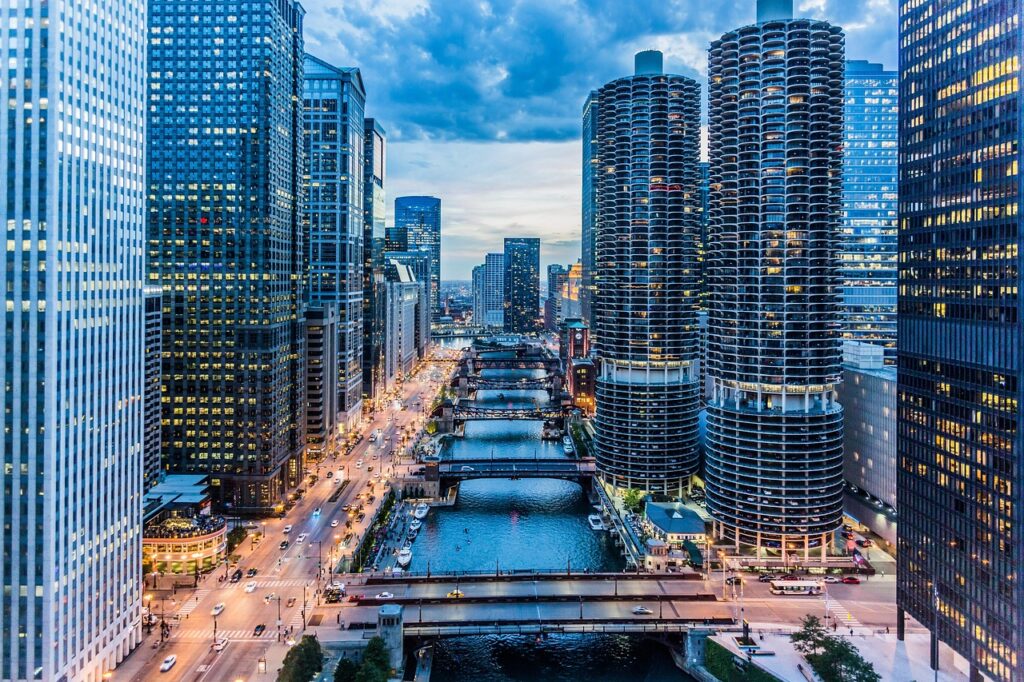
In the evening, head to the Chicago Riverwalk for golden hour. This is where downtown becomes cinematic. Bridges frame the skyline, lights start to glow, and the river gives the city a softer edge. Sit for a while without multitasking. Watch boats slide past. Let the day settle. If you want dinner nearby, keep it simple and central so the evening stays relaxed. Day 1 should end with you feeling satisfied, not overbooked.
Day 2: Architecture, Skyline Views, and a Perfect Chicago Night
If you do one “must-pay” experience in Chicago, make it the architecture river cruise. It’s the fastest way to understand why Chicago looks the way it does, and why people talk about this city as if it invented modern skylines. The difference between “pretty buildings” and “a city that makes sense” is context, and the cruise gives you that in a compact, genuinely entertaining window. Book a time that fits your energy—morning often feels calmer—and arrive with a buffer so you start the experience relaxed.
If you like keeping reservations in one place (and avoiding the chaos of juggling confirmations), this is a good moment to use Klook for activities and timed entries you already planned to do anyway. The goal isn’t to stack purchases; it’s to remove friction so your day feels smooth.
After the cruise, do the skyline-from-above moment. Chicago has more than one viewpoint, but you only need one. If you want the most iconic adrenaline photo, choose Skydeck and do The Ledge. If you want a slightly calmer experience with an emphasis on the lakefront panorama, choose 360 CHICAGO. Either way, the key is timing. A late afternoon slot can be ideal because you get daylight views and the early glow toward evening without trying to force a perfect sunset in peak crowds.
Then give Chicago one strong night. Tonight is when deep dish makes sense, not because you’re “supposed” to do it, but because you’re ready for a cozy, unhurried meal. Deep dish is a commitment; treat it like dinner, not a quick bite, and don’t plan something overly ambitious immediately afterward. When you finish, let the evening keep going in a different direction: a jazz set, a blues night, or simply a long walk that lets you feel the city’s after-dark energy. Chicago at night doesn’t need a checklist—it needs one place that feels alive.
Day 3: Museum Campus, One Neighborhood, and a Strong Finish
Spend your morning along Museum Campus, where the city gives you its best “postcard” composition: skyline, water, and wide-open space. Even if you only choose one museum to enter, the area itself is part of the experience. The lakefront light here is flattering, and the skyline looks especially complete from this angle because you’re far enough away to see the full shape of downtown.
Pick one major museum experience and do it well. Trying to rush multiple institutions in one morning usually turns into a blur. Choose based on what you want to feel: wonder, depth, or pure visual spectacle. Give yourself time to actually linger, and you’ll leave with something you can describe later, not just something you technically “visited.”
In the afternoon, choose one neighborhood and go deeper instead of sampling three places briefly. If you want modern Chicago energy and a food scene that feels current, the West Loop is the move. If you want indie shops, a more local pace, and that “stumble into something interesting” energy, Wicker Park fits beautifully. If you want a quieter, more thoughtful vibe that balances your downtown days, Hyde Park can be the perfect contrast.
If this is your checkout day and you don’t want to drag luggage around, it’s worth dropping bags for a few hours so you can wander freely. RadicalStorage can make that last afternoon feel spacious instead of logistical.
For your final evening, return to the water and end with a sunset walk along the lakefront or a skyline-facing spot near the river. Then choose a last meal based on your favorite version of Chicago. Not the “best” according to the internet—the best for your story. Architecture lovers should eat near the river. Art lovers should stay close to downtown classics. Neighborhood lovers should go back to the area that felt most like them. A good last meal doesn’t chase hype; it closes the trip with intention.
Where to Stay and How to Get Around Without Stress
For three days, central neighborhoods make everything easier. The Loop is efficient for early starts and museum-heavy days, while River North and Streeterville keep you close to the riverwalk, dining, and that lively “first trip to Chicago” energy. The main advantage of staying central is flexibility: you can reset at your hotel and head back out without losing time, which matters more than you think when you’re walking a lot.
Getting around is simple if you combine walking with transit and occasional rideshares. Downtown is built for walking, and the CTA makes it easy to jump between areas without turning your day into a car ride. Rideshares are best saved for weather moments, late-night returns, or when you have a reservation you don’t want to miss. You don’t need a rental car for this itinerary, but if you’re extending the trip with a day trip outside the city, that’s when a car starts to make sense. If you go that route, comparing options through EconomyBookings can help you find a pickup plan that doesn’t eat your morning.
AIREVO Tips About Chicago in 3 Days
Chicago is at its best when you stop trying to “win” it. The city is rich enough that even the famous sights can feel personal—if you arrive early, linger longer, and let the day breathe. A three-day itinerary succeeds when it includes pauses: a coffee by the river, a lakefront stretch with no destination, a museum room you stay in just because it feels good.
If you only pre-book a couple of things, make them the ones that protect your time. The architecture cruise is worth reserving because it’s popular and because it changes how you see the city. A timed observation deck entry is worth it because lines can quietly steal a whole afternoon. Everything else can be chosen based on the day’s mood and weather, which is exactly how Chicago locals live the city.
Finally, plan for comfort like it’s part of the itinerary. Layers matter because the lake can change the feel of a day. Shoes matter because Chicago invites walking. And a little connectivity—maps that work, tickets that open, transit info that loads—keeps the trip flowing. When the logistics disappear, Chicago shows up.
FAQs About Chicago in 3 Days
Is 3 days enough for Chicago if it’s my first visit?
Yes, if you prioritize the big downtown experiences, do one major museum well, and pick one neighborhood afternoon. The key is pacing: fewer stops, more time in the right places.
What’s the one tour that’s truly worth it?
The architecture river cruise. It gives you the context that makes Chicago feel like a masterpiece rather than just a skyline.
Skydeck or 360 CHICAGO—what should I choose?
Choose Skydeck if you want the most iconic adrenaline moment and that “glass ledge” photo. Choose 360 CHICAGO if you want a slightly calmer vibe with a stronger emphasis on lake views.
Do I need a car for this itinerary?
No. For a classic 3-day Chicago trip focused on the city, walking plus transit is usually faster and far less stressful than dealing with parking.
What’s the best time to visit Millennium Park and The Bean?
Early morning is best. The atmosphere is calmer, photos are easier, and it feels less like you’re battling crowds.
What should I do on my last day if I have luggage?
Store it for a few hours so you can explore hands-free. RadicalStorage is a simple way to keep the final afternoon enjoyable.
Do not miss our newest articles!

Tampa isn’t one city—it’s a shift in tempo that follows Florida’s seasons. In winter and early spring, it’s breezy waterfront walks, patio brunches, and day trips that don’t feel like endurance sports. In summer, it turns...
Atlanta isn’t one city—it’s a whole collection of moods that shifts with the seasons. In spring, the city feels freshly polished, with dogwoods blooming and patio culture returning. In summer, it turns lush and steamy, the...
Chicago isn’t one city—it’s four, depending on the season. In summer, it’s a lakefront playground with festivals and patio nights that stretch late. In winter, it’s dramatic, wind-whipped, and built for museums, deep-dish...
All Rights Reserved.
Made with 🧡 by Marc Guerrero.
Made with 🧡 by Marc Guerrero. All Rights Reserved | Affiliate Disclosure | Cookies Policy | Legal Notice | Privacy Policy | Terms & Conditions