

If you’re craving a little more New Orleans (or you want to tailor this plan to your exact vibe), keep our two most useful guides bookmarked: the full roundup of things to do in New Orleans and our hand-picked list of free things to do in New Orleans. They’re ideal for filling that “floating slot” we talked about—helping you choose experiences by neighborhood, mood, or budget, and uncovering ideas that make the city feel even more personal.

New Orleans in 3 Days: A Soulful Itinerary That Feels Like a Secret
New Orleans isn’t a place you “do.” It’s a place you let happen to you—slowly, like humidity, like a horn line drifting through a side street, like powdered sugar on your shirt that you don’t bother brushing off because it feels like proof you were really there. In three days, the goal isn’t to check every landmark. The goal is to catch the city in its natural state: mornings that smell like chicory coffee, afternoons that turn golden on old porches, nights that sound like a conversation between trumpet and drum.
This itinerary is designed to give you the feeling of New Orleans, not just the photos. You’ll still hit the icons, but you’ll do them with better timing, calmer pacing, and a few “only-in-this-city” detours that make the whole trip feel personal. Think of it as a love letter with directions.
New Orleans in 3 Days – Index
- 1. Before You Land: The 5 Decisions That Shape Your Trip
- 2. Where to Stay for This 3-Day Plan (Without Overthinking It)
- 3. Day 1: The French Quarter—Go Classic, Then Go Deeper
- 4. Day 2: Garden District Elegance + Magazine Street Energy
- 5. Day 3: City Park Mornings + A Finale in Sound and Candlelight
- 6. Food & Drink You’ll Remember (Even If You Forget Street Names)
- 7. Jazz Without the Tourist Traps: How to Hear the Real Thing
- 8. Getting Around: Streetcars, Walking, and When Not to Drive
- 9. Small Things That Make a Big Difference (Safety, Timing, Etiquette)
- 10. AIREVO Tips About New Orleans in 3 Days
- 11. FAQs About New Orleans in 3 Days
Before You Land: The 5 Decisions That Shape Your Trip
The first decision is your arrival rhythm. If you can land before mid-afternoon, you’ll get a full first evening without feeling rushed. When you’re comparing routes, it’s often worth checking a couple of flexible dates—New Orleans flight prices can swing fast, especially around big weekends. If you want to keep it simple, you can browse options through AIREVO to compare flight times that give you a full first night and lock in the schedule that matches your energy.
Next is connectivity. New Orleans is a city where you’ll walk a lot, improvise a lot, and end up in neighborhoods you didn’t plan on. Having reliable data matters more than you think—especially for late-night rideshares, restaurant waits, and finding the correct doorway to a tiny music spot. If you don’t want to deal with local SIM logistics, an eSIM like Airalo for instant data when you land keeps everything smooth.
Third: decide whether you’re renting a car. For this exact 3-day plan, you don’t need one. Parking is annoying, and the best parts are walkable or streetcar-friendly. The only reason to rent is if you’re adding a bayou drive, plantation visit, or a day outside the city. If you do, keep it targeted—pick up for one day, not three, and return it the same evening.
Fourth: choose your “one anchor experience.” In New Orleans, one well-chosen tour or ticketed moment can elevate the whole trip—something like an intimate jazz set, a cooking experience, or a swamp excursion. We’ll build that into Day 3 and give you options.
Finally: accept the weather as part of the story. Heat, sudden rain, and heavy air aren’t dealbreakers here. They’re part of the soundtrack. Dress for comfort, plan for breaks, and don’t fight the pace.
Where to Stay for This 3-Day Plan (Without Overthinking It)
If you want the “walk out the door and New Orleans starts immediately” feeling, stay near the French Quarter—but not in the loudest part of Bourbon Street. The sweet spot is the Quarter’s edges (closer to Esplanade or toward the river side) or the Warehouse District/CBD just outside it. You’ll be able to walk to morning coffee, come back midday for a reset, and still reach music at night without a long commute.
If you prefer a calmer, more residential vibe—porches, oak trees, morning jogs—consider the Garden District or Lower Garden District. You’ll trade a bit of late-night spontaneity for beauty and sleep, but you’ll still be connected by the St. Charles streetcar line, which feels like a moving postcard.
Wherever you stay, prioritize a place with easy access to walking routes and quick pickup zones for rideshares. In New Orleans, “five minutes away” can turn into fifteen if you’re stuck behind a parade, a train, or a street closure you didn’t know existed. It’s charming, until you’re hungry.
Day 1: The French Quarter—Go Classic, Then Go Deeper
Morning: Arrive, drop bags, and meet the city gently
Start with a slow entry. If you arrive before check-in, don’t drag luggage across cobblestones—stash it and go be free. A service like RadicalStorage for a quick luggage drop near the Quarter can turn an awkward first afternoon into an effortless one.
Then do the first iconic thing the right way: go early. Jackson Square in the morning is calmer, more photogenic, and more honest—the painters setting up, the light catching the cathedral, the sense that this place still belongs to locals before it belongs to cameras. Jackson Square is the postcard, but in the morning it feels like a living room.
Midday: The Quarter as a story, not a checklist
Walk the Quarter like you’re reading it. Look up at balconies. Notice the courtyards you can only see through half-open gates. If you want a guided thread that makes the architecture and history click without turning the day into a lecture, this is a perfect place for an audio walk—something like “a self-paced French Quarter audio tour from WeGoTrip” lets you move at your own speed while still understanding what you’re seeing.
Slip away from the main arteries for a moment. The Quarter’s magic lives in its edges: a quiet block that smells like jasmine, a hidden bar behind an unmarked door, a tiny gallery with the fan turning lazily overhead. This is also the right time for your first proper meal—don’t rush it. New Orleans rewards lingering.
Night: A first taste of music, but with intention
For your first evening, aim for a jazz experience that feels rooted in the city’s DNA. Preservation Hall is the name everyone knows for a reason: it’s intimate, history-soaked, and built around listening. Check their calendar and tickets ahead of time so you’re not gambling on the door.
After that, walk it off. The Quarter at night can be loud and chaotic, but it can also be cinematic—gaslight glow, echoes of brass, the river air changing the temperature by a degree. Let the city show you its first version of itself, then get some sleep. Tomorrow is where it gets beautiful.
Day 2: Garden District Elegance + Magazine Street Energy
Morning: St. Charles streetcar and the porch-perfect side of town
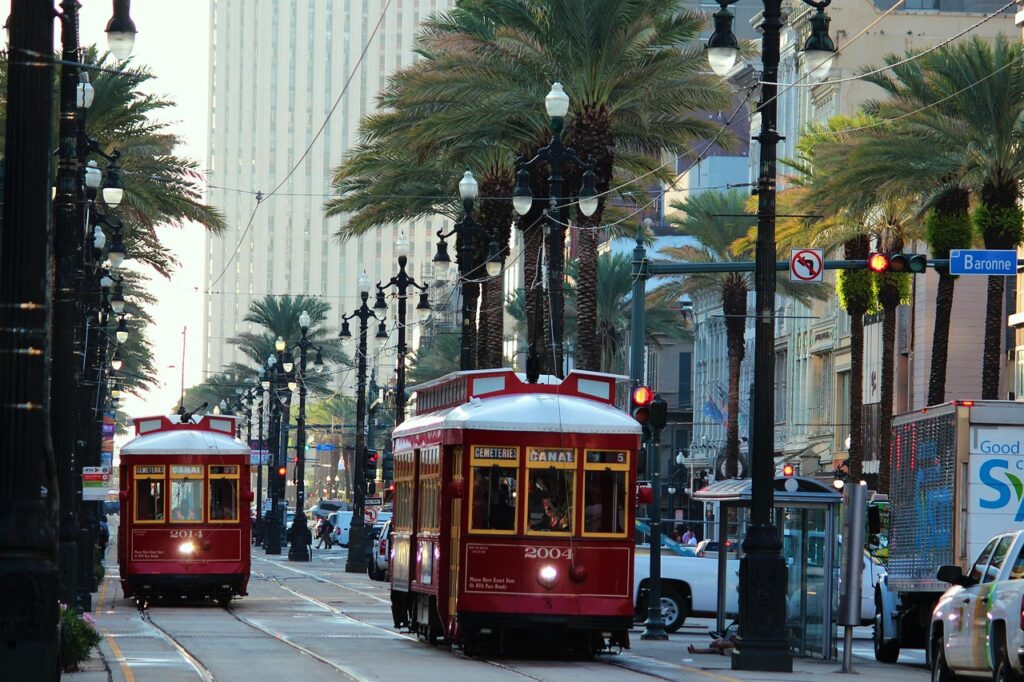
Today is about contrast: from the Quarter’s density to the Garden District’s breathing room. Take the St. Charles streetcar like a local ritual. The fare for a ride is famously affordable, and it’s one of the most charming “transit experiences” in America.
Once you’re there, walk slowly. The Garden District isn’t a “do it fast” neighborhood; it’s a “notice details” neighborhood. The ironwork, the layered paint, the plants that look like they’ve been thriving for a hundred summers. Let yourself drift, and you’ll naturally end up where you’re meant to be.
Midday: Magazine Street—shopping, snacks, and the joy of wandering
Magazine Street is where New Orleans feels contemporary without losing its soul. You’ll find vintage stores, bookshops, coffee counters, and restaurants that make you want to cancel dinner plans so you can eat twice. The trick here is not to power-walk. Wander, stop when something pulls you in, and trust that the street will build your day for you.
If you’re someone who likes a structured “food story,” this can also be a great afternoon for a cooking or tasting experience—just don’t force it. The best New Orleans meals often happen because you followed your nose and a recommendation from someone behind a counter.
Evening: Sunset on the river, then Frenchmen Street for the real night pulse
Tonight is your Frenchmen Street night. The vibe is different from Bourbon: more music-first, more people actually listening, more nights that end with “how did we end up here?” Frenchmen is a cluster of venues and street energy that’s easy to love—especially if you arrive with patience and stay open to whatever’s playing.
A good way to do Frenchmen is to start early, catch a first set, take a break for food, then go back for a second spot. If you’re moving as a couple or small group, decide ahead of time how you’ll regroup if you get separated—streets get crowded, and the night gets loud. Keep it simple and you’ll stay relaxed.
Day 3: City Park Mornings + A Finale in Sound and Candlelight
Morning: City Park—green space that feels like a reset button
Start your final day with trees. City Park is one of the best “slow mornings” in the city—wide paths, shade, and the sense that New Orleans can be gentle when it wants to be. If you want the beignet moment without the Quarter crowds, Café du Monde’s City Park location is a smart play, and their posted hours make morning planning easy.
Eat slowly. This isn’t a “grab and go” breakfast. It’s a sit-down, laugh-about-the-powdered-sugar kind of start—the perfect emotional pacing for your last day.
Midday: One big museum—or one big outdoor adventure
Now choose your “anchor.” If you want something powerful and genuinely world-class, The National WWII Museum can take most of your afternoon in the best way. It’s open daily with specific holiday closures, so you can plan confidently.
If you’d rather get out into Louisiana’s landscape, this is the day for a swamp or bayou excursion. It’s the classic “only here” experience that changes your mental picture of the region—cypress trees, still water, and a sense of quiet that contrasts beautifully with the city’s sound. For an easy booking flow, you can browse on New Orleans swamp tours and experiences on Klook and pick something that fits your timing without turning the day into logistics.
Evening: Your “finale”—choose a night that feels like a memory
On your last night, don’t just “go out.” Choose a finale. That might mean returning to Frenchmen for one more set, catching a scheduled show, or going back to the Quarter for a quieter, candlelit dinner and a slow walk afterward.
If you’re the type who wants one last deep dive into the city’s story, this is also a beautiful time for a themed audio walk—something like a haunted-history route or a music-heritage thread—again, self-paced works best in New Orleans because it lets you linger when a street corner feels alive. A WeGoTrip self-guided evening walk can add just enough narrative to make your last night feel stitched together.
End the night somewhere you can actually hear your own conversation for a moment. New Orleans is generous, but it’s intense. Give yourself a quiet closing scene—river air, soft light, a final sip—and you’ll leave with the city still humming in your chest.
Food & Drink You’ll Remember (Even If You Forget Street Names)
New Orleans food isn’t just “good.” It’s identity. The dishes carry families, migrations, weather, survival, celebration—everything. The best approach in three days is to mix iconic classics with one or two meals that feel spontaneous.
Make room for a proper gumbo and a proper jambalaya, but don’t treat them like trophies. Ask what’s best today. In New Orleans, the “best” version of a dish can change based on the cook, the season, and the mood of a kitchen. Also, don’t skip the simple joys: a po’ boy eaten with your elbows on a table, red beans and rice on the right day, something fried that should feel heavy but somehow doesn’t because you’re walking it off all afternoon.
And please—hydrate. This is a city where cocktails are part of the culture, but the difference between a magical night and a miserable morning is often just water and pacing. New Orleans will always offer you another round. You don’t have to accept every offer to have an unforgettable time.
Jazz Without the Tourist Traps: How to Hear the Real Thing
The secret to finding great music here isn’t insider status. It’s timing, humility, and a willingness to listen. Start earlier than you think, especially on weekends. The first sets can be less chaotic, and you’ll often hear the band at its tightest before the room gets rowdy.
If you’re doing Preservation Hall, treat it like a concert: arrive on time, stay present, and let the simplicity be the point. Their venue is historic and focused on the music, and their ticketing/calendar details are worth checking in advance so the night stays smooth.
On Frenchmen, aim to hear at least one set where people are actually paying attention. It changes everything. You’ll feel the difference immediately: the room becomes quieter, the band becomes braver, and you realize New Orleans nightlife isn’t about volume—it’s about conversation, and the horns are part of it.
Getting Around: Streetcars, Walking, and When Not to Drive
For this itinerary, walking is your best friend, and the streetcar is your most romantic shortcut. The St. Charles line is not just transportation—it’s an experience. And with the standard fare structure, it’s an easy way to move without overthinking.
Rideshares are great at night or when you’re crossing neighborhoods quickly, but be patient around major events and busy weekends. Pickup points can be tricky, and traffic can turn a short ride into an unexpected tour of brake lights.
Driving is the thing I’d avoid unless you’re intentionally leaving the city for an excursion. Parking stress is real, and the neighborhoods that make New Orleans special are best experienced on foot, at human speed. If you do decide to add a day trip, renting for just that day is usually the cleanest move—something like a one-day rental via EconomyBookings can keep it practical without committing you to three days of parking math.
Small Things That Make a Big Difference (Safety, Timing, Etiquette)
New Orleans is friendly, but it’s still a major city. The simplest rule is to stay aware without getting anxious. Walk with purpose at night, especially outside the busiest areas, and keep your phone use mindful on corners. If a street feels empty in a way that feels wrong, take the next one over. The city offers plenty of well-lit, lively options—choose those and you’ll rarely feel uncomfortable.
Timing matters more here than in many cities. Do popular spots early, take breaks during peak heat, and aim for a slower pace in the afternoon so your nights stay enjoyable. New Orleans nights can run late, and the city rewards the traveler who doesn’t burn out by Day 2.
Finally, be kind. Tip musicians. Tip service workers. Say hello back. This is a city built on hospitality and art, and your respect becomes part of the ecosystem that keeps it alive.
AIREVO Tips for New Orleans in 3 Days
If you want New Orleans to feel like your trip instead of a generic itinerary, build in two kinds of pauses: a quiet pause and a sensory pause. The quiet pause is something like City Park in the morning or a slow streetcar ride with no plan beyond watching the city pass by. The sensory pause is something like sitting with coffee and beignets longer than you normally would, or staying for “one more song” when the band finds a groove. Those moments become the emotional anchors you remember years later.
Also, don’t treat the French Quarter as the whole city. It’s a jewel, but it’s not the entire crown. The shift from Quarter to Garden District, from tourist energy to neighborhood rhythm, is one of the most satisfying contrasts you can experience in just three days. Let your trip have chapters.
If you’re traveling with someone, agree on a nightly ritual: a final ten-minute walk, a last drink at a quiet bar, or even just sitting on a hotel balcony listening to distant music. It sounds small, but in New Orleans it becomes the thread that ties everything together.
And one practical thing: keep your plans flexible by one “floating slot” each day. New Orleans loves to interrupt you—in the best way. A second-line parade, a recommendation from a bartender, an unexpected set on Frenchmen. If every hour is booked, you miss the magic.
FAQs About New Orleans in 3 Days
Is 3 days enough for New Orleans?
Yes—if you focus on rhythm rather than volume. Three days is enough to experience the French Quarter, the Garden District vibe, one major museum or outdoor excursion, and multiple nights of live music without turning your trip into a sprint.
Do I need to rent a car?
Not for this itinerary. Walking, streetcars, and rideshares cover almost everything. Consider a car only if you’re adding a day trip outside the city; otherwise it’s more hassle than help.
What’s the best area to stay in?
If you want maximum walkability and spontaneous nights, stay near the French Quarter’s quieter edges or the Warehouse District/CBD. If you want charm and calm, the Garden District/Lower Garden District is a beautiful base with streetcar access.
Is Preservation Hall worth it?
If you want an intimate, music-first experience, it’s one of the most iconic places to hear traditional New Orleans jazz. Check their calendar/tickets ahead so your night is smooth.
What should I prioritize if it’s my first time?
Do an early Jackson Square moment, one night on Frenchmen, one neighborhood day (Garden District + Magazine), and one “anchor” experience—either The National WWII Museum or a swamp/bayou tour. That combination delivers the city’s essence.
When’s the best time of day to explore the French Quarter?
Morning and early afternoon are ideal for atmosphere, photos, and calmer walking. Night is fun too, but it’s louder and more chaotic—better as a deliberate choice than your only way of seeing it.
Is the National WWII Museum a full-day thing?
It can be, depending on how deep you go. Many travelers give it most of an afternoon and still feel they could return. It’s open daily with specific holiday closures, so you can plan around it.
Do not miss our newest articles!

Tampa isn’t one city—it’s a shift in tempo that follows Florida’s seasons. In winter and early spring, it’s breezy waterfront walks, patio brunches, and day trips that don’t feel like endurance sports. In summer, it turns...

Atlanta isn’t one city—it’s a whole collection of moods that shifts with the seasons. In spring, the city feels freshly polished, with dogwoods blooming and patio culture returning. In summer, it turns lush and steamy, the...
Chicago isn’t one city—it’s four, depending on the season. In summer, it’s a lakefront playground with festivals and patio nights that stretch late. In winter, it’s dramatic, wind-whipped, and built for museums, deep-dish...
All Rights Reserved.
Made with 🧡 by Marc Guerrero.
Made with 🧡 by Marc Guerrero. All Rights Reserved | Affiliate Disclosure | Cookies Policy | Legal Notice | Privacy Policy | Terms & Conditions