


Free Things to Do in Chicago (That Feel Anything But “Budget”)
Chicago is one of those rare big cities where “free” doesn’t mean “forgettable.” The skyline is a public spectacle. The lakefront is basically an outdoor museum that runs for miles. And some of the city’s most iconic spaces—parks, trails, cultural buildings, beaches—don’t ask for a ticket at all.
This guide is built for real travelers: people who want the wow moments without paying for them, but also want details that save time (when to go, what to look for, what’s truly free, and what quietly isn’t). Mix and match these ideas into a full weekend, or use them to pad a longer itinerary when you’ve already splurged on one big attraction.
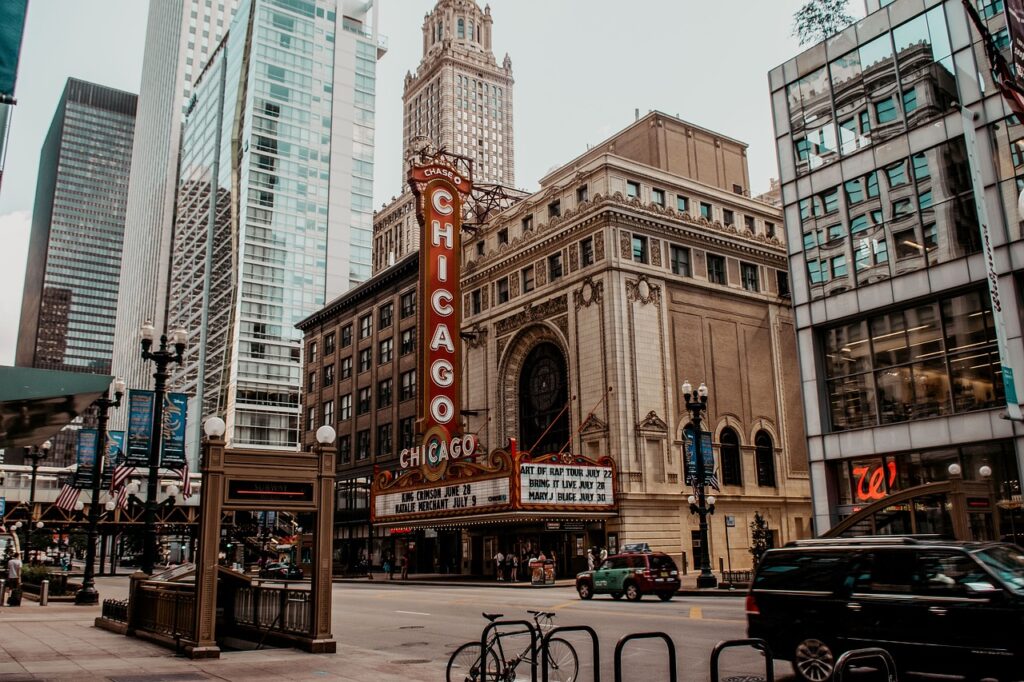
Free Things to Do in Chicago – Index
- 1. Millennium Park and Grant Park: Chicago’s free front yard
- 2. The Chicago Riverwalk: the city’s best “urban promenade”
- 3. Lakefront Trail and Chicago beaches: a free shoreline reset
- 4. Lincoln Park: the free zoo, gardens, and a surprisingly calm conservatory
- 5. The Chicago Cultural Center: a palace of free art and architecture
- 6. Museum “free windows” and resident-friendly admission deals
- 7. Garfield Park Conservatory: a tropical escape that can still be free
- 8. The 606: an elevated trail that doubles as a neighborhood sampler
- 9. Free summer magic: concerts, fireworks, and festival energy
- 10. Chicago Public Library as an attraction: views, art, and quiet culture
- 11. Public art and self-guided architecture: the “look up” itinerary
- 12. AIREVO tips: how to do Chicago free without feeling cheap
- 13. FAQs About Free Things to Do in Chicago
Millennium Park and Grant Park: Chicago’s free front yard
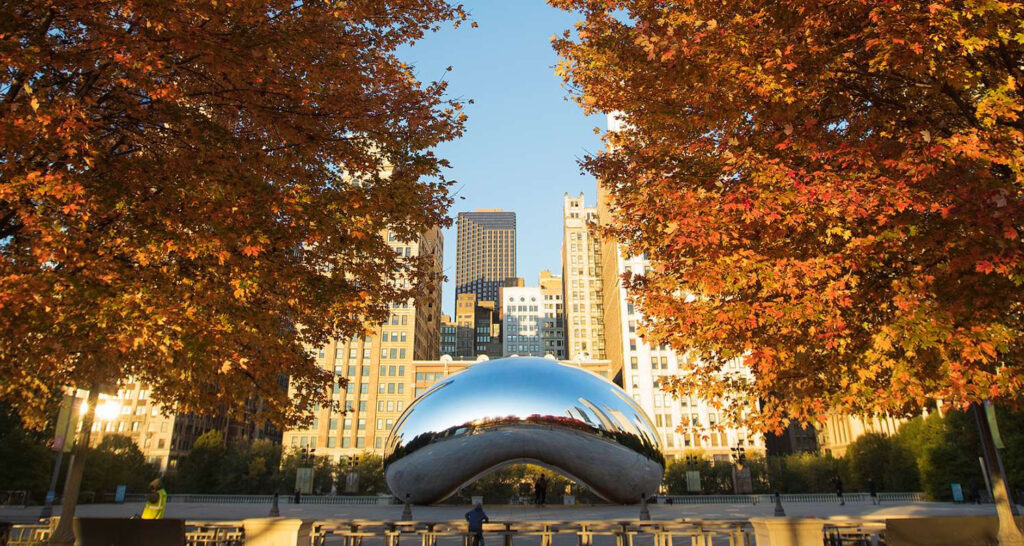
Chicago’s easiest “first free win” is also its most iconic: stepping into Millennium Park and letting the city introduce itself properly. The first time you see Cloud Gate—“The Bean,” reflecting the skyline, the clouds, and your own tiny traveler-self—it’s hard to believe it’s just… there. No ticket scanner, no entry fee, no big ceremony required. On busy days you’ll share it with a cheerful crowd of first-timers and locals on lunch breaks, which is part of the point: Chicago’s most famous artwork is also deeply public.
Cloud Gate (The Bean): how to enjoy it without crowds
If you want photos that feel calmer (and a moment that feels more yours), go early. Morning light makes the steel surface read softer and the plaza feels less like a social event. If you arrive later, don’t fight it—lean into the energy instead. The Bean is one of those sights where the crowd becomes part of the story, because it’s people reacting to Chicago in real time.
What else is free here besides the Bean
What makes Millennium Park special isn’t only the headline sculpture. It’s the way the area keeps unfolding as you walk: the feeling of moving between modern architecture and open lawns, between public art and the ordinary downtown rhythm. From here, Grant Park stretches south like a green runway along the lake, a reminder that Chicago deliberately reserved prime land for people, not private development. This is the zone where the city stages itself—casual wanderings, big civic moments, and the satisfying sense of being right in the middle of something.
Free concerts in summer: how to plan the perfect evening
In summer, this area becomes an effortless free night out when the city’s outdoor programming kicks in. The simple move is to treat it like a “build-your-own” evening: arrive early enough to claim a comfortable spot, bring something small to sip, and let the skyline do the heavy lifting as your backdrop.
Quick timing tips (sunset, weekdays, photo light)
If you’re deciding between a weekday and weekend, weekday evenings usually feel easier and less packed. If your priority is photos, late afternoon into sunset gives you the most flattering light on the buildings without the midday harshness.
One practical note that saves headaches: downtown data can get spotty when everyone’s outside at once. If you’d rather not depend on public Wi-Fi for maps and transit—especially if you’re arriving from abroad—setting up an eSIM before you land makes the whole day smoother. A natural affiliate placement here is: for reliable navigation, you can set up an Airalo eSIM for Chicago.
The Chicago Riverwalk: the city’s best “urban promenade”
The Chicago Riverwalk is where the city feels cinematic without trying too hard. It runs along the main branch of the river and turns what could have been “just water between buildings” into a public living room. You’re surrounded by architecture that looks like it came from a designer’s dream of a modern metropolis—steel, glass, Art Deco details, and bridges that keep the scene changing every few minutes.
Best times to walk it (morning vs golden hour)
Early morning is the underrated sweet spot if you want a calmer experience: softer light, fewer people, and that calm-before-the-city feeling. Late afternoon is best if you like watching the city shift from workday to evening, when the river starts catching reflections and the air cools.
The Riverwalk as a free connector between landmarks
The Riverwalk is perfect as a connector activity: use it to stitch together other neighborhoods and sights without spending money. Walk it between downtown landmarks, then drift toward Millennium Park or head toward the lake. If you’re traveling with someone who’s not as into “just walking,” treat it like a scavenger hunt for architecture details—ornamental bridge houses, elegant staircases, and the way old and new buildings sit next to each other without apologizing.
The Riverwalk as a free connector between landmarks
If you want a deeper layer without committing to a pricey group tour, this is one of the few places where a self-guided audio tour genuinely enhances a free walk. You’re already doing the walking for free; the audio just gives the buildings a voice. A natural affiliate placement here is: to add context as you stroll, try a WeGoTrip Chicago architecture audio tour.
Lakefront Trail and Chicago beaches: a free shoreline reset
Chicago’s lakefront is one of the city’s greatest flexes: miles of open shoreline you can enjoy without paying an entry fee. Even if you do nothing but show up, the city suddenly feels wider and calmer—the skyline in the distance, the water stretching out like a horizon you can borrow for the day.
Lakefront Trail: the easiest free itinerary in Chicago
The Lakefront Trail quietly solves your day. Pick a direction, walk until something catches your attention, and let the city reveal itself. The skyline looks different from the shoreline than it does from downtown; it feels softer, more like a postcard you can step into. If you’re a runner or cyclist, mornings here can feel like you’ve hacked the city—fresh air, huge views, and an energy that makes even a short loop memorable.
Beaches 101: what’s free and what isn’t
Beaches deserve their own moment. The “free” part is access to the sand, the lake, the people-watching, and the sense that Chicago suddenly becomes a summer town. The “not always free” part is anything that looks like a service—food, drinks, chair rentals, and paid activities—so decide in advance whether you’re doing a pure free beach day or letting yourself pay for one thing and keeping the rest free.
North Avenue Beach: the classic first-timer stop
North Avenue Beach is a classic for a reason: lively, scenic, and close enough to downtown that you can treat it like a spontaneous stop rather than a planned excursion. It’s one of the best places to feel the “Chicago in summer” mood without needing a plan.
If you’re arriving early and don’t want to drag bags along the lakefront, luggage storage can turn a half-day into a full free day. A natural affiliate placement here is: drop your bags with Radical Storage near downtown Chicago so you can walk the shoreline hands-free.
Lincoln Park: the free zoo, gardens, and a surprisingly calm conservatory
Lincoln Park is where Chicago shows off how well it does public space. The headline is the Lincoln Park Zoo, which is open year-round and free to enter, making it perfect for travelers who want something outdoorsy and distinctly local without planning ahead.
Lincoln Park Zoo: the best free family-friendly stop
The zoo is best approached like a pleasant stroll rather than a checklist. Give yourself permission to wander slowly and let the animals you happen to see become the experience. If you’re traveling with kids—or even just someone who needs a break from museums and buildings—this is one of the easiest reset activities in the city.
Lincoln Park Conservatory: free entry, but reservations matter
Nearby, the Lincoln Park Conservatory adds a different kind of calm: greenhouse warmth, lush plants, and a quiet, almost old-fashioned atmosphere. The crucial planning detail is that it often operates with timed entry reservations that are free but required, which can be the difference between “effortless afternoon” and “we can’t get in.”
How to combine zoo + conservatory in one smooth walk
The easiest way to make this feel seamless is to start with whichever one has the tighter timing (usually the conservatory reservation), then let the zoo and park paths fill the rest of the window. It turns into a gentle half-day that feels like you’re living the city rather than touring it.
The Chicago Cultural Center: a palace of free art and architecture
There are cities where the “free cultural building” is basically a lobby with a brochure rack. Chicago didn’t do that. The Chicago Cultural Center feels like the city decided—at some point, with complete confidence—that beauty and public space should be generous. From the outside, it already looks stately; inside, it’s the kind of place that makes you slow your steps without realizing it. It’s not only an art stop. It’s an architectural experience you stumble into in the middle of downtown, which is exactly why it works so well for travelers: you can drop in for 20 minutes or stay an hour and it never feels like you “didn’t do it right.”
Why the building itself is the attraction
Even if you walked in with zero interest in exhibits, the building would still carry the visit. The scale, the staircases, the details—everything tells you this is a civic space designed to impress, not to sell. It’s the perfect antidote to the “paywall feeling” some cities have, because it reminds you that Chicago’s best moments are often public by design. If you’re traveling with someone who likes photography, this is one of those places where you can take beautiful shots without trying; the light and symmetry do half the work for you.
Free exhibits and how to check what’s on
One of the joys of the Cultural Center is how low-pressure it is. You can treat it as a cultural surprise: walk in, see what’s showing, wander through a couple of rooms, and walk out feeling like you got a real dose of Chicago’s arts life without committing to a major museum day. It also makes the surrounding downtown area feel more livable and less “tour-only,” because you’re stepping into a place locals use too.
The perfect rainy-day plan downtown
This is one of Chicago’s best “save the day” moves when the weather turns. If wind off the lake makes the outdoors feel harsh, or a sudden shower rolls in, the Cultural Center gives you warmth, shelter, and something genuinely interesting to do—without defaulting to spending money. The best rhythm is simple: do a short outdoor stretch first (Riverwalk or Millennium Park), then warm up inside here, then head back out when you’re ready. It turns a weather interruption into a well-paced day.
Museum “free windows” and resident-friendly admission deals
Chicago museums are elite—and many of them are priced like it. But “free” isn’t completely off the table; it’s just more conditional than parks and public buildings. The city has legitimate free access windows, and some of the best ones are tied to Illinois residency, certain seasons, or specific days. The reason this matters is that it can change your entire trip structure. If you line up one free museum day with your downtown day, you can build a high-value itinerary that still feels abundant.
How free museum days work in Chicago (and why they change)
The mistake people make is assuming “free days” are a fixed calendar tradition. In reality, they’re more like living policies—schedules shift, eligibility rules evolve, and sometimes a museum’s free window exists only in a certain season. That doesn’t make them unreliable; it just means the planning step is different. Think of it like checking restaurant hours before you walk over: you don’t want to build your day around something that quietly changed.
Art Institute free opportunities: what to look for
The Art Institute is a good example of how this can work in your favor. It has published free admission opportunities and seasonal access periods (often focused on residents), which can turn an ordinary weekday into a world-class art day. If you’re eligible, this is one of the most powerful “budget upgrades” in Chicago—because it doesn’t feel like a compromise. It feels like you got access to something major, on purpose.
If you’re not eligible: the ‘one splurge’ strategy
If you’re not an Illinois resident—or if the timing doesn’t align—there’s still a smart way to keep your trip feeling free-first. Pick one museum as your intentional splurge, then keep the rest of the day built on public experiences: the Riverwalk, parks, the Cultural Center, the lakefront. That framing matters. You’re not “paying because you have to.” You’re choosing one anchor experience, and letting Chicago’s free assets carry the rest.
If you like the idea of deeper context without committing to a guided group experience, this is where a self-paced audio layer can fit naturally—especially on a day when you’re already walking a lot and want a narrative thread. A light-touch affiliate placement that doesn’t feel salesy is: if you want optional storytelling to accompany your route, consider a WeGoTrip self-guided Chicago audio tour that matches your day’s theme.
Garfield Park Conservatory: a tropical escape that can still be free
There’s a specific travel feeling that’s hard to manufacture: stepping from a city street into a completely different climate and mood. Garfield Park Conservatory delivers that. The air shifts. The light changes. Plants that look impossible in Chicago suddenly surround you, and it feels like the city built a tiny portal to somewhere warmer and softer. It’s also one of the best examples of how Chicago’s cultural life spreads beyond the downtown core—if your trip has been skyline and Loop energy, this adds texture.
When it’s free (and when it isn’t)
This is one of those stops where “free” can depend on policy and proof of residency, and those details can evolve. The important point for your article is the logic: it’s a major public garden/conservatory experience, and for locals it can be free in a meaningful way—while visitors may follow different admission guidance. That’s why it’s best presented as “can still be free,” not “always free,” so readers don’t arrive with the wrong expectation.
Reservations and what to expect inside
This isn’t a place you want to rush. The best experience is slow and sensory—wander, notice the temperature, let the rooms change your mood one by one. It’s also a strong “reset” stop if you’ve been doing hard urban walking. Conservatories have a way of making the city feel quieter even if you’re not actually leaving it.
If you’re not eligible: the ‘one splurge’ strategy
Garfield Park Conservatory works because it’s not just “pretty.” It changes the story of your trip. Many first-time visitors experience Chicago as a collection of famous downtown moments; this gives them an experience that feels more local, more lived-in, and more surprising. It’s the kind of stop people remember later because it didn’t feel inevitable—it felt discovered.
The 606: an elevated trail that doubles as a neighborhood sampler
The 606 is one of the most Chicago ways to do “free”: it’s practical, creative, and community-forward. It’s an elevated trail that doesn’t feel like a tourist attraction, which is exactly why it belongs in a traveler’s plan. You’re above street level, moving through neighborhoods, catching little flashes of the city you don’t see from downtown sidewalks. It’s a walk, yes—but it’s also a way of letting Chicago introduce you to itself beyond the headline sights.
The 606 basics: what it is and best time to go
Morning gives you that calm, local rhythm—runners, dog walkers, people starting their day. Late afternoon is when it starts to feel social and golden, with warmer light and more people out enjoying the city. Either way, it’s one of those rare places where you can do “nothing special” and still feel like you did something meaningful.
How to use it to discover neighborhoods without a plan
The 606 shines when you stop treating it like a straight-line route and start treating it like a sampler. Walk a section, hop off when something catches your eye, and let your curiosity decide the next hour. That’s how you end up with the best travel moments: murals you didn’t search for, a small coffee stop that wasn’t on your list, a pocket of the city that makes you understand Chicago beyond the Loop.
The ‘hop-off’ method: turn a walk into a mini adventure
Make yourself a simple rule and follow it. Hop off when you see something you’d photograph. Hop off when you hear music. Hop off after 20 minutes and explore for 30. That tiny structure makes the trail feel like a game, and it keeps you from walking it in a “just trying to finish” mindset. The goal isn’t distance—it’s discovery.
Free summer magic: concerts, fireworks, and festival energy
In summer, Chicago becomes a city that performs in public. You don’t need to buy a ticket to feel like you’re part of an event; you just need to know where to be. This is where Chicago’s “free” truly becomes an experience rather than a savings strategy. A warm evening in the park with music or a lakefront skyline with fireworks can feel like a headline moment of your trip—and the fact that it’s free is almost secondary.
Millennium Park + Grant Park: free music nights
Free outdoor concerts are one of the most “Chicago” ways to spend an evening because they feel both civic and casual. There’s a collective ease to it: people arrive with friends, sit on the lawn, and let the city’s cultural life happen in front of them. For a traveler, it’s also a perfect low-effort night: no reservations, no dress code, no stress—just show up with time and a little patience for crowds.
Navy Pier fireworks: how to enjoy them without spending
Fireworks are where you want the right mindset: you’re not obligated to pay for Pier attractions to justify being there. The best experience is often treating it as a skyline show rather than a Pier show—pair it with a lakefront walk, arrive with time to settle into a good viewing spot, and let it be the capstone of your evening rather than the whole plan.
One optional paid add-on that doesn’t ruin the budget
If you want to keep your trip mostly free but add a single curated experience, summer is the easiest season to do it because the city is full of options. The key is to choose one thing—not five—and let the rest remain beautifully public. A soft affiliate placement that fits here is: if you want to browse what’s available on your dates and pick one standout, explore Klook Chicago activities and commit only if it truly adds something unique to your trip.
Chicago Public Library as an attraction: views, art, and quiet culture
Libraries are underrated travel stops because they offer something tourists don’t always get: permission to slow down. Chicago’s library system is part of its civic pride, and the flagship Harold Washington Library Center is the kind of place where you can feel the city’s cultural seriousness without paying for it. This section matters because it gives readers an alternative to “more walking” when they need a break that still feels meaningful.
Harold Washington Library Center: the underrated free stop
This is a great place to go when your day needs a pause. Step inside and the city noise fades a notch. It’s also one of the few downtown experiences that’s both calm and interesting, which makes it perfect for solo travelers, winter visitors, or anyone trying to pace themselves through a long itinerary.
Free events and how to fit this into your day
The library works best as an intentional intermission. Drop in between outdoor sights, take 30–60 minutes to reset, and walk out with energy again. That’s how you avoid the classic travel crash where your feet and brain hit “done” at 3 p.m. and you lose your evening.
Best moments to go (winter, rain, mid-day reset)
When the weather is harsh, the library becomes a warm refuge. When the day is hot, it becomes a cool one. When the itinerary is too intense, it becomes a pressure valve. The magic is that it feels like part of the city, not a tourist detour.
Public art and self-guided architecture: the “look up” itinerary
Chicago is an architecture city, full stop. And the beautiful part is that you don’t need to pay for that truth. You can experience Chicago’s design language simply by walking with intention: looking up, noticing contrasts, letting bridges and facades become your museum. This section is where you turn “free” into something elevated—because you’re not just walking, you’re reading the city.
A free architecture route you can do on foot
The easiest route is to link your strongest anchors: Millennium Park, the Riverwalk, the Cultural Center. But the real experience isn’t only the anchors—it’s what happens between them. Chicago’s blocks shift personality quickly, and that rapid change is a feature, not a flaw. One street feels modern and sharp; the next feels ornate and historic. You start to understand the city as layered rather than singular.
The best way to experience public art without rushing
Public art works best when you treat it like something you encounter, not something you conquer. Linger. Circle back. Watch how light changes the surfaces. Cloud Gate gets the spotlight, but the deeper joy is how often Chicago places beauty where you don’t have to buy your way in. If your reader wants “hidden gems,” this is how they find them: slow down and let the city show off quietly.
Optional structure: self-guided audio walk
If your traveler likes a narrative thread—without joining a group—this is where a self-guided audio route makes sense. It adds meaning to what you’re already seeing while keeping the experience free-form. A natural affiliate placement is: for a self-paced architecture storyline, try a WeGoTrip self-guided Chicago architecture walk and pause whenever something catches your eye.
AIREVO tips: how to do Chicago free without feeling cheap
The secret to a great free Chicago trip is not trying to “replace” paid attractions with lesser versions. It’s building your days around experiences the city already offers publicly—lakefront, parks, architecture, cultural buildings—and letting those be the highlight. Chicago’s best free moments are often the ones that feel most like real life: a skyline view that hits at the right time of day, a river walk where the wind off the water makes the city feel alive, a concert where strangers sit together like it’s normal to have world-class music in a public park.
Plan your day like a rhythm rather than a list. Start with something expansive and outdoors, like the lakefront or Millennium Park, then tuck an indoor anchor into the middle—the Cultural Center, a conservatory, a library—so weather never ruins your mood. Finish with a sunset walk or a skyline viewpoint so the day ends on a natural high. That structure is what makes “free” feel intentional instead of accidental.
One last practical thought: Chicago is a city where logistics can quietly cost money—airport transit choices, last-minute rides, day-trip temptations. If you’re planning to explore beyond the city center, compare options early rather than in a rush. Sometimes rent a car makes sense for a single day, but most of the time, Chicago’s best free experiences live exactly where you can reach them on foot or by transit.
If you’re using this guide as your “free-first” base, the easiest next step is to plug it into our complete Chicago itinerary. We built our main pillar post to help you connect these no-cost highlights with the city’s must-dos, neighborhood picks, and a realistic plan for different trip lengths—so you can keep the trip flexible without missing the iconic moments. When you’re ready to round out your itinerary, jump to our complete guide to things to do in Chicago and stitch everything together in a way that fits your pace, your season, and your budget.
If you’re planning more U.S. city breaks (or just love building itineraries that don’t rely on pricey tickets), you can keep the momentum going with our other free-guides. New Orleans is perfect for travelers who want culture and atmosphere on a budget—start with our free things to do in New Orleans. And if you’re heading west, you’ll be surprised how much of Vegas is genuinely free once you know where to look; bookmark our free things to do in Las Vegas to build a trip around skyline views, street energy, and classic Vegas spectacle without the spend.
FAQs About Free Things to Do in Chicago
Are Chicago’s beaches really free to enter?
Yes—access to Chicago’s public beaches is free, which is one of the best “big city” perks in summer. What usually isn’t free are the extras: chair/umbrella rentals, snacks, and any paid activities nearby. If you’re keeping it truly budget-friendly, bring your own water and towel and treat the beach as a simple lakefront day.
What’s the best free thing to do in Chicago if I only have a few hours?
A fast, high-impact combo is Millennium Park (Bean + park stroll) followed by the Chicago Riverwalk. You’ll get the skyline, the river, iconic public art, and that “this is Chicago” feeling—without paying for entry. If you time it for late afternoon, you also get great light for photos.
Is the Lincoln Park Zoo always free, or only on certain days?
It’s always free to enter, year-round, which makes it perfect for spontaneous plans. Some special experiences inside the zoo can be paid, but the main grounds and exhibits are free—so you can enjoy a full visit without spending anything.
Do I need reservations for free indoor attractions like conservatories?
Sometimes, yes. Places like the Lincoln Park Conservatory often use free timed-entry reservations, which can fill up on weekends or during peak seasons. The best strategy is to check the reservation system as soon as you know your date, especially if you’re traveling in summer or around holidays.
Are there free museum days in Chicago for tourists (non-residents)?
Many free museum days are aimed at Illinois residents, and the rules vary by museum and season. That said, it’s still worth checking official museum pages and the city’s updated calendars because schedules change and some programs expand access at certain times of year. If you’re not eligible, a good approach is to pick one paid museum as your “splurge” and keep the rest of the day free with parks, the Riverwalk, and the lakefront.
What are the best free things to do in Chicago in winter?
Winter is when Chicago’s free indoor gems really shine: the Chicago Cultural Center (architecture + exhibits), libraries like Harold Washington Library Center for a warm cultural break, and conservatories for a green “escape” from the cold. Pair one indoor stop with a short Riverwalk or Millennium Park walk for photos—just keep it brief when the wind picks up.
Do not miss our newest articles!
All Rights Reserved.
Made with 🧡 by Marc Guerrero.
Made with 🧡 by Marc Guerrero. All Rights Reserved | Affiliate Disclosure | Cookies Policy | Legal Notice | Privacy Policy | Terms & Conditions