


Free Things to Do in Las Vegas (That Actually Feel Like Vegas)
Las Vegas has a reputation for draining wallets at record speed, but the city has a second personality that most first-timers miss: a surprisingly generous, endlessly walkable collection of free shows, galleries, gardens, art installations, and people-watching zones that deliver the “only in Vegas” feeling without the price tag. If you plan it right, you can fill entire days with moments that feel cinematic—fountains exploding to Sinatra, a neon canyon of light above your head downtown, flamingos gliding through a hidden garden, and contemporary art casually living inside hotel lobbies like it belongs there.
This guide is built for travelers who want the real experience without the constant upsell. Some of these stops are world-famous, some are quietly brilliant, and a few are “free to enter, pay if you want to play,” which is Vegas’s favorite loophole. The key is knowing what’s truly free, what’s worth timing, and how to stitch it together so you’re not spending half the day crossing the Strip in the sun.
Free Things to Do in Las Vegas – Index
- 1. The trick to doing Vegas for free (without feeling like you’re settling)
- 2. Best free things to do on the Las Vegas Strip
- 3. Best free things to do in Downtown Las Vegas
- 4. Hidden & off-Strip free experiences
- 5. Free art, culture & indoor attractions
- 6. How to plan a full free day in Las Vegas
- 7. AIREVO Tips: how to make free Vegas feel premium
- 8. FAQs About Free Things to Do in Las Vegas
The trick to doing Vegas for free (without feeling like you’re settling)
The Strip is basically a theme park built out of hotels, and the free experiences are the “public rides.” They’re designed to pull you inside, impress you, and keep you wandering. Your job is simply to show up at the right time and let the city do what it does best: spectacle.
Start thinking in short loops rather than long treks. Vegas blocks are deceptive—what looks close on a map can feel far in the heat. If you group stops by neighborhood, you’ll spend more time enjoying and less time power-walking past construction walls and casino entrances. Also, free experiences are often best at off-peak hours: early mornings for calm, late evenings for the glow.
One practical detail that makes free exploring smoother is staying connected without hunting for Wi-Fi every time you duck into a new resort. A travel eSIM is especially handy on the Strip and downtown where you’ll be checking show times, rideshare pickups, and walking routes; Airalo is an easy option if your phone supports eSIM.
Best free things to do on the Las Vegas Strip
Bellagio: the two free icons that still feel like a reveal
The Bellagio is a masterclass in “open to the public, but make it feel exclusive.” Even if you’ve seen it on video a hundred times, the real magic is how it catches you off guard: you’ll be sweating outside, then suddenly you’re in cool air, surrounded by flowers and marble, and it feels like you teleported.
The Fountains of Bellagio
The fountains are the classic for a reason. The show is free, frequent, and genuinely big-screen dramatic in person, especially after dark when the Strip turns into a neon reflection on the water. The schedule varies by day, but the performances run through the afternoon and evening, with more frequent shows later at night.
The best “free-seat upgrade” is simply choosing the right spot. If you want the full sweep and the music to hit, stand near the center of the lake railing. If you want slightly less crowd crush, drift toward the edges and treat it like a moving gallery—watch one show, walk a little, watch the next from a new angle.
This is also a perfect place for a professional-feeling photo: shoot a wide frame with the hotel behind the water, then one close frame where the water fills the shot like fireworks.
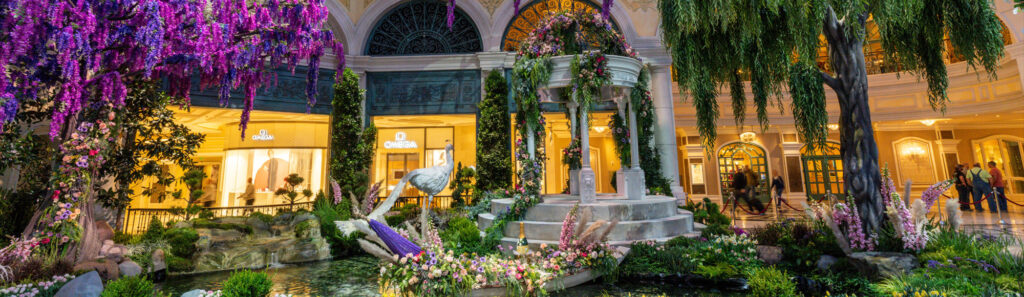
The Conservatory & Botanical Gardens
Walk inside and you’ll hit the Conservatory, a seasonal installation that feels like a living stage set—massive floral sculptures, theatrical lighting, and details that reward you for slowing down. It’s free to enter, and the displays rotate through the year, which is why repeat visitors still go back every trip.
If you’re photographing it, don’t just aim at the centerpiece. Look for the “micro” details: tiny props tucked into the landscaping, textured petals, miniature scenes hidden near the base. That’s what makes the photos feel like you were really there, not just passing through.
Flamingo Wildlife Habitat: a hidden oasis on the Strip
This is one of Vegas’s best-kept-in-plain-sight gifts: a lush garden with streams, waterfalls, and—yes—actual flamingos. You don’t need a ticket or reservation; you simply show up during operating hours and wander.
What makes it special isn’t just the animals; it’s the vibe shift. The casino floor is noise and light, and then the habitat is calm and green, like a pocket park someone accidentally built inside a party city. It’s especially good in the morning when the heat is soft and the garden feels quiet. If you’re traveling with kids or anyone who needs a sensory break, this stop can reset the whole day.
Fall of Atlantis Show at Caesars Palace
Inside the Forum Shops at Caesars Palace, the Fall of Atlantis show is one of those wonderfully strange free attractions that feels like a leftover from an era when Vegas built dramatic “mini theme parks” inside shopping malls—and it’s still running because it’s iconic. The show is animatronic mythology with fire effects, booming narration, and that perfect blend of impressive and ridiculous that Vegas does better than anywhere else.
The schedule is part of the appeal because it’s easy to plan around: it runs Thursday through Monday, every hour on the hour, generally from 12 p.m. to 8 p.m. If you’re already walking the Strip and want a free “sit down and be entertained” moment, this is ideal. You can pair it with the fountains at Bellagio or the Conservatory earlier, then drift here for shade, spectacle, and a surprisingly fun break from walking.
One honest note: because it’s an older attraction, occasional downtime happens, and sometimes visitors show up to find it temporarily not operating. It’s still worth swinging by because you’re in the area anyway—and if it is running, you’ll be glad you caught it.
Wynn Las Vegas: Lake of Dreams, the “secret” free show
If the Strip has a spectrum from loud to elegant, Lake of Dreams sits on the elegant end. It feels tucked away, almost like you’re not supposed to know about it unless someone told you. The show blends projected visuals, music, and whimsical theatrical elements across the water, and it lands especially well at night when everything feels more cinematic.
The official timing is refreshingly simple: shows run nightly every half hour beginning at dusk. This makes it one of the easiest free “finales” to anchor a night around. The move is to treat it like a palate cleanser: after a busy dinner or a long walk, you stop here, breathe, watch something dreamy, then decide where your night goes next.
This is also a great moment for subtle monetization that doesn’t feel salesy. If you like walking with context—history, design, hidden stories—this is where a self-guided audio experience can add depth without forcing you into a pricey group. A well-placed line like “If you want the stories behind the Strip’s most iconic spectacles, you can follow a self-guided audio route with WeGoTrip” fits naturally here, because it enhances the experience rather than interrupting it.
ARIA Resort & CityCenter: free contemporary art walk
Vegas is underrated as an “accidental museum,” and ARIA/CityCenter are the best proof. You’ll find large-scale contemporary artworks placed in public spaces—lobby areas, walkways, and open zones—so you can experience them without buying a ticket or entering a gallery line.
ARIA specifically lists a complimentary walking tour, offered 7 days a week. Even if you don’t join a tour, you can wander at your own pace and treat it like a curated stroll. The trick is to slow down. Most people in Vegas are moving fast with a destination in mind, which means if you stop and look—really look—you get a calmer, richer version of the city than the “casino blur” most travelers remember.
This is one of my favorite free afternoon blocks because it’s both air-conditioned and meaningful. You’re not just killing time; you’re seeing ambitious art in a setting where you least expect it, and that contrast becomes part of the story you take home.
The Park MGM & Bliss Dance sculpture
Between Park MGM and New York-New York Hotel and Casino, The Park is one of the Strip’s most enjoyable “just wander” areas. It’s landscaped, built for lingering, and it has the kind of open-air, people-watching energy that makes Vegas feel social instead of purely transactional.
At the center is the famous Bliss Dance sculpture—tall, striking, and especially cool after dark when it feels like it belongs in a futuristic film. MGM Resorts even calls out the 40-foot Bliss Dance as a must-see while exploring The Park, which tells you it’s intentionally part of the free experience. This is a perfect place to get a professional-looking travel photo without paying for a viewpoint ticket: step back far enough to capture scale, then take one closer angle that shows the texture and glow.
If you’re writing or planning content, this is also a smart spot for a single, soft affiliate mention that’s genuinely useful: “For a one-and-done paid upgrade later, you can browse activities and time slots on Klook, but The Park itself is one of those rare Strip walks that’s already satisfying for free.” That keeps the reader first, and the monetization secondary.
Free indoor attractions when the Strip heat hits
Vegas heat (or winter wind) can turn a nice walk into a fast march toward the nearest air conditioning. That’s when “free to enter” attractions become surprisingly valuable. M&M’S Las Vegas is a bright, chaotic, very Vegas detour that costs nothing to browse—and it works as a quick mood reset between bigger stops.
Nearby, the Coca-Cola Store Las Vegas is similar: walking in is free, while optional tastings and add-ons cost extra. That makes it a good “look, cool off, snap a photo, move on” stop that doesn’t break your budget unless you choose to. The trick with both is mindset: treat them as quick air-conditioned experiences, not shopping missions, and they’ll feel like clever itinerary glue rather than tourist traps.
If you want, tell me the month you’re going (even just “spring” or “summer”) and whether you’re staying closer to the Strip or downtown, and I’ll rewrite this whole “First Friday onward” section into a smooth, realistic route with the best timing so you’re not crisscrossing the city for no reason.
Best free things to do in Downtown Las Vegas
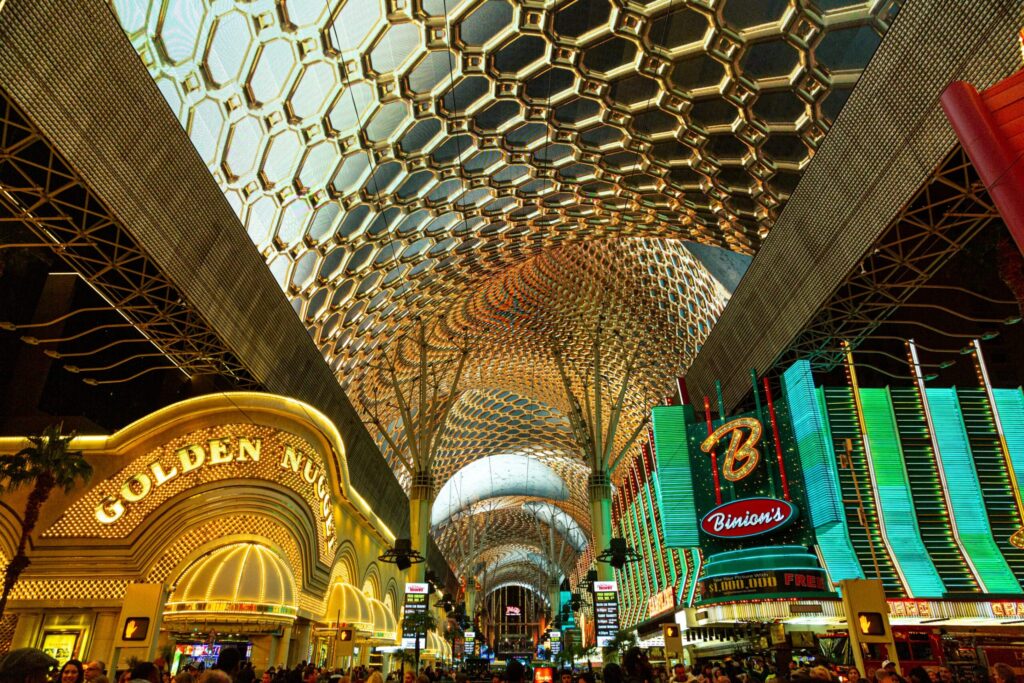
Fremont Street Experience: the Viva Vision canopy show
If the Strip is polished spectacle, downtown is neon chaos in the best way. The heart of it is Fremont Street Experience, where the canopy above you becomes a massive LED ceiling that runs nightly shows. The key detail: the Viva Vision shows start at the top of the hour in the evening and run late, so you can plan dinner around them and never feel rushed.
Watching it is simple: step under the canopy, find a spot where you can look up comfortably, and commit to being a tourist for six minutes. The sound is loud, the visuals are over-the-top, and the crowd energy turns it into a shared event rather than just a screen.
If you want to understand downtown beyond the light show, a self-guided audio walk can add context without forcing you into a pricey group tour. This is a natural spot to recommend WeGoTrip for audio-guides because downtown’s stories are layered—old Vegas, neon history, mob myths, reinvention—and hearing it while you walk makes the place click.
Circus Circus: free circus acts worth timing right
The reason the free circus acts at Circus Circus work so well is that they’re not a “token” performance—they’re the identity of the place. You’re watching aerialists and acrobats perform on a central stage right in the middle of the Carnival Midway, surrounded by arcade lights and classic Vegas chaos. The atmosphere is half family-friendly nostalgia, half “how is this just happening in the middle of a hotel?”
Timing matters here. Officially, performances start at 1:30 p.m. Monday–Thursday and 11:30 a.m. Friday–Sunday. The biggest mistake people make is wandering in randomly, staying two minutes, and leaving right before the act begins—so treat it like a mini appointment. Arrive a little early, claim a spot with a clear view of the stage, and let yourself watch one full act from start to finish. Once you do, the whole experience clicks: it’s short, punchy, and genuinely impressive.
If you’re traveling on a budget (or just trying to stay cool in the afternoon), this stop is also a stealth “air-conditioning reset.” You can go from Strip heat to indoor entertainment without spending a cent, then continue your day with fresh energy instead of that slow, cranky tourist meltdown that Vegas sun can trigger.
Downtown Container Park (free entry, best before Fremont)
Downtown Container Park is exactly what it sounds like—an open-air space built from shipping containers—but it’s more charming than the concept suggests. It feels like a mini neighborhood hub: casual, walkable, and made for lingering. You can enter for free, wander through the area, and enjoy the vibe even if you don’t buy anything.
It’s also very helpful to know the age policy so you don’t get surprised: kids are allowed until 9 p.m. daily, and after 9 p.m. it’s 21+. That makes it especially good for families earlier in the day, and better for adults later in the evening when downtown starts to feel more nightlife-oriented.
From a practical standpoint, this is a perfect “buffer stop” before Fremont Street’s canopy show. You can stroll Container Park, then walk over to the Fremont area when the lights and crowd energy ramp up.
First Friday Las Vegas: free art, music & local culture
If your trip overlaps the first Friday of the month, this is one of the best “local” experiences in the city—and it costs nothing to attend. The vibe is very different from the Strip: you’re in the Arts District, walking between artists, pop-up galleries, murals, music, and food trucks, with a crowd that feels like residents and travelers mixing naturally. The organizers are explicit that the event itself is free, and they post each month’s date, address, and hours (for example, they list January 2, 2026 at 1025 South 1st St from 5 p.m. to 11 p.m.).
What makes First Friday feel special is that it’s not a “show you watch,” it’s a neighborhood you move through. The best way to enjoy it without spending is to treat it like a slow evening walk: arrive around the start time if you want the full arc of the night, or come a bit later if you prefer a livelier crowd and stronger music energy. Even if you don’t buy a thing, you still get the atmosphere—street art backdrops, people dressed up in creative ways, and that satisfying feeling of seeing the city beyond casinos.
Logistics are where you can accidentally lose your “free” streak. Parking in this area can be frustrating on event nights, but the City of Las Vegas has promoted a park-and-ride option: you can park at their garage on 500 S. Main St. and hop a free shuttle during a window they’ve listed as 3 p.m. to midnight for First Friday access. That one detail can save you both money and stress, and it’s the kind of practical hack that makes the entire night smoother.
If you want the event to feel deeper than “a cool street fair,” this is the perfect place for a subtle upgrade that still keeps you independent: a self-guided audio walk that explains the Arts District’s stories while you wander. Done right, it turns murals and small storefront galleries into a narrative rather than a blur; that’s where something like a WeGoTrip audio route can fit naturally, especially if you like learning as you walk rather than joining a group.
Hidden & off-Strip free experiences near Las Vegas
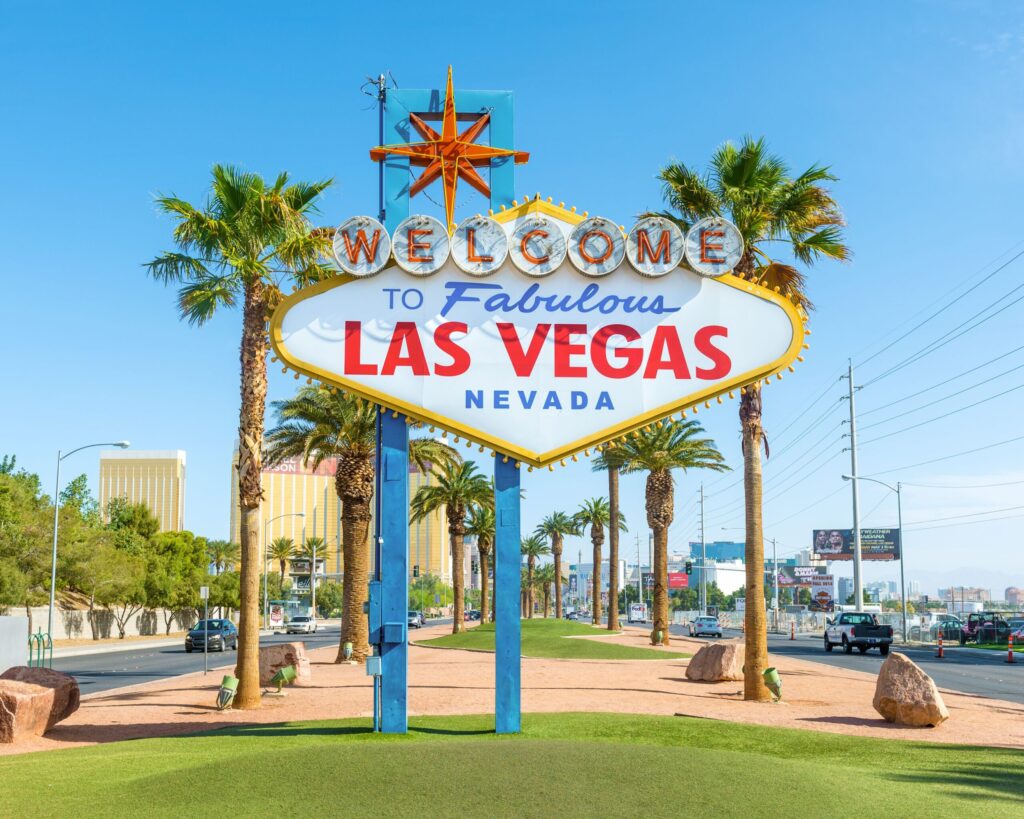
Welcome to Fabulous Las Vegas sign (how to avoid the line)
This stop is popular because it’s genuinely iconic, not because people lack imagination. It’s free, it’s instantly recognizable, and it gives you a “we were here” photo that never goes out of style. The trick is simply choosing the right moment: early morning gives you softer light and fewer crowds; late night gives you neon glow and a faster-moving line because people take quicker photos.
A practical note that matters more than it sounds: there is a small parking area right by the sign, but it’s limited, so you may wait or prefer rideshare if you’re short on patience. Travel guides and local write-ups consistently mention the tiny lot (roughly a dozen spaces), which is why timing is everything. If you’re driving, know that access is easiest from the side of the boulevard that lines up with the lot; otherwise you may need to loop around rather than trying to dart across traffic.
If you’re between hotel checkout and an evening flight, this is also a very “Vegas-real” moment when luggage becomes the enemy. Dropping your bags with Radical Storage can keep the day feeling light and spontaneous instead of like a chore. You’ll enjoy the sign, walk a bit, grab photos, and still move freely. (Their Las Vegas coverage is widely available, and the concept is built for exactly this scenario.)
Seven Magic Mountains: free desert art installation
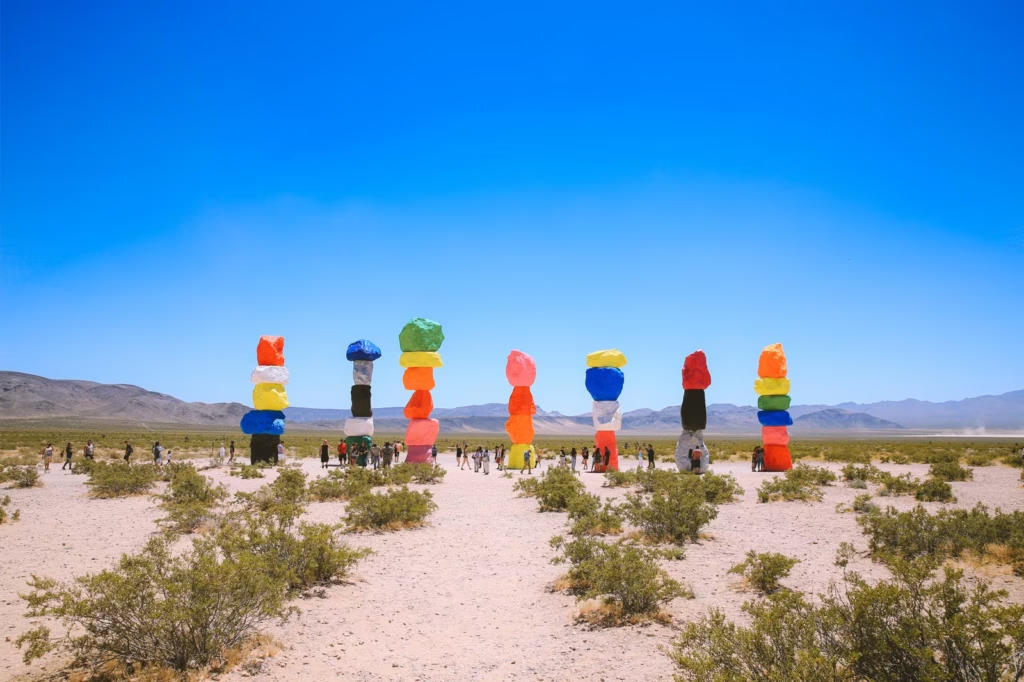
If you want one off-Strip experience that still feels “only in Vegas,” this is it. Seven Magic Mountains is a bold land-art installation—brightly painted stacked boulders rising out of the Mojave—and it’s free to visit. The official site recommends visiting from sunrise to sunset, and it also emphasizes “leave no trace” and that overnight camping is prohibited since it sits on open public land.
What people don’t realize until they arrive is how much the light changes the entire experience. Midday sun can flatten the colors, and the heat makes you rush. Early morning or late afternoon gives you contrast, richer color, and fewer people in your photos. You’ll feel the difference immediately: the installation looks more surreal, the sky reads bigger, and your pictures come out with that editorial “travel feature” look without any filter tricks.
Because it’s outside town, transportation is the only real barrier to keeping it “free.” If you’re already planning to pair it with another nearby stop (like Henderson), a rental car often costs less than stacking rideshares, and it gives you the freedom to leave whenever you want rather than timing your whole day around pickups. That’s a natural place to compare deals through EconomyBookings if you want the flexibility without turning it into a splurge.
Ethel M Botanical Cactus Garden (when it’s actually free)
This is the antidote to casino noise. The cactus garden is quiet, clean, and unexpectedly photogenic, especially around golden hour when desert plants look sculptural rather than spiky. Most of the year, it’s the kind of place you can stroll slowly, reset your nervous system, and remember that Vegas is surrounded by real desert landscape, not just LED screens.
The important nuance is seasonality. During their holiday light event, they’ve charged a small fee (local reporting notes a $3 entry fee during a recent season, with certain exceptions). So it’s “free-ish” depending on when you visit. If your trip is in late fall or winter, it’s worth checking what’s happening that week so you’re not surprised at the entrance. Even when there is a fee, it’s still one of the gentlest, most calming “non-Vegas Vegas” experiences near the city.
Free art, culture & indoor experiences (pay only if you want)
Pinball Hall of Fame: free entry, pure nostalgia
This place is a budget traveler’s dream because it hands control back to you. You can walk in for free, look around like it’s a living museum of sound and design, and leave having spent nothing. Or you can drop a few dollars and get a full hour of joy out of it. The official site lists hours as 10 a.m. to 9 p.m. most days and 10 a.m. to 10 p.m. on Fridays and Saturdays, and it’s known for being a “pay only to play” spot.
It’s also in a super convenient location for budget planning because it’s right on Las Vegas Boulevard and close to the famous sign area. That means you can pair it with the sign in a single outing and keep transportation efficient. The atmosphere is wonderfully unpretentious: rows of machines, that classic arcade soundtrack, and the kind of nostalgia that hits even if you didn’t grow up playing pinball.
Free-to-enter museums, lobbies & galleries
One of the most underrated ways to enjoy Las Vegas for free is to treat the city itself like an open-access museum. Many resorts intentionally design their lobbies, corridors, and public spaces as cultural showcases—meaning you can walk in, look around, and leave without spending a dollar, while still feeling like you’ve experienced something thoughtfully curated.
Several major hotels on the Strip display museum-quality art, design installations, and architectural statements in areas that are completely open to the public. Large-scale sculptures, immersive light pieces, and contemporary artworks often live in plain sight, quietly elevating spaces most people rush through on their way to casinos or restaurants. If you slow down and explore intentionally, these areas feel less like hotel lobbies and more like informal galleries.
This kind of free exploration is especially valuable during the hottest parts of the day. Instead of forcing yourself to walk outside in the sun, you can move comfortably indoors, take your time with the artwork, and let the city reveal a calmer, more sophisticated side. It’s also one of the best ways to experience Las Vegas without sensory overload—no flashing slot machines, no loud music, just design, space, and atmosphere.
What makes these free-to-enter spaces feel premium is the contrast. You’re surrounded by luxury architecture and high-end design, yet there’s no ticket booth, no queue, and no pressure to buy anything. It’s the kind of experience that rewards curiosity rather than spending, and it’s one of the easiest ways to add depth to a free Vegas itinerary without adding friction.
If you enjoy understanding the stories behind what you’re seeing—why a piece is there, what it represents, or how it fits into the city’s evolving identity—this is also a great moment to layer in context. Exploring these spaces with a self-guided audio experience can turn a casual walk into something more meaningful, without locking you into a group tour or fixed schedule. It keeps the freedom intact while adding narrative, which is exactly what free Vegas does best when you approach it intentionally.
How to plan a full free day in Las Vegas
A “free day” in Las Vegas works best when it feels intentional, not like you’re ping-ponging between random lobbies. The Strip is built to distract you, and that’s fun—until you realize you’ve walked five miles, seen a hundred slot machines, and somehow ended up spending money just because you were thirsty and tired. The secret is building your day around a few anchor moments that are undeniably Vegas, then using calmer, air-conditioned stops in between so your energy stays high and your budget stays intact.
Start your morning with the places that feel best before crowds and heat build. Bellagio’s Conservatory is perfect for this because you can actually linger and notice the details without feeling rushed, and the lighting is usually kinder if you’re taking photos. From there, step outside for a fountain show if the timing works; it’s one of those experiences that still delivers even if you’ve seen it online, and it sets the tone for “big Vegas” without paying a cent. Once you’ve done that iconic moment, drift to something softer like Flamingo’s Wildlife Habitat, where the vibe flips from spectacle to oasis. It’s the kind of contrast that makes the city feel more layered than its stereotypes.
The afternoon is where most people accidentally break their “free” plan, because heat and fatigue trigger convenience spending. This is the moment to lean into indoor experiences that are genuinely enjoyable: Circus Circus for the free acts if you want old-school Vegas oddness, or ARIA/CityCenter if you want a calmer, almost museum-like stroll with contemporary art. If you’re the kind of traveler who likes a little narrative while you walk, this is also where an audio-guided route can make the day feel curated rather than improvised; a self-guided option via WeGoTrip fits naturally here because it’s not “buy a tour,” it’s “add context while you already walk.”
For your evening finale, decide which version of Vegas you want to remember. If you want the electric, loud, communal version, head downtown to Fremont Street and time it to a canopy show, then wander through the Arts District if it’s First Friday and your dates line up. If you prefer something more elegant and slightly hidden, make Wynn’s Lake of Dreams your night cap, where the atmosphere feels almost secret compared with the Strip’s constant brightness. Either way, you end the day with a true “Vegas scene” rather than simply fading out in another casino corridor.
If you’re building a two-day free itinerary, the best move is to keep one day Strip-centric and make the other “off-Strip but still simple,” pairing Seven Magic Mountains with Ethel M’s cactus garden and then coming back in time for a night show. If you rent a car for that day, comparing prices through EconomyBookings can keep it practical rather than impulsive, especially if you’re traveling with friends and can split costs.
AIREVO Tips: how to make free Vegas feel premium
Free Vegas feels premium when you curate the mood. Instead of chasing a long checklist, choose two or three moments that are undeniably “wow” and build your day around them like anchors. Bellagio fountains at night, Fremont’s canopy show, and Wynn’s Lake of Dreams are all free, but they deliver the kind of theatrical polish people assume must cost money. When your day has those peaks, everything else becomes a pleasant glide rather than a scramble.
The second trick is to use contrast on purpose. Vegas is at its best when you bounce between extremes: loud spectacle and quiet oasis, indoor glamour and open-air night energy, neon chaos and desert calm. That’s why pairing Flamingo’s Wildlife Habitat with something like CityCenter’s art walk works so well—you’re not just “doing free things,” you’re experiencing different versions of the city. Even off-Strip stops like Seven Magic Mountains can feel like a luxury editorial shoot if you time them for golden hour and keep your photos intentional rather than rushed.
Finally, keep your spending decisions deliberate, not reactive. Most people spend money in Vegas because they’re tired, hot, hungry, or lost—basically because logistics wore them down. Staying connected helps avoid that spiral: if you don’t want to rely on spotty Wi-Fi, an eSIM from Airalo can make navigation and timing smooth. And if you have a long gap between checkout and a late flight, storing your luggage turns your final hours into a comfortable wandering window instead of a burdened march; Radical Storage is a simple way to keep the day feeling light.
If you do add one paid thing, make it a single “signature” experience rather than a bunch of small impulse buys. A well-chosen activity can feel like a highlight rather than a leak in the budget, and browsing options on Klook can help you compare what’s truly worth it while keeping the rest of your plan free.
If this free-first approach fits your travel style, it’s worth zooming out and looking at the bigger picture of what Las Vegas has to offer beyond individual stops. Our complete Things to Do in Las Vegas guide brings everything together—from iconic highlights and hidden gems to day-by-day ideas that help you balance must-see experiences with smarter planning. It’s the perfect next step if you want to turn a good Vegas trip into a great one, without wasting time, energy, or budget.
FAQs About Free Things to Do in Las Vegas
Is Las Vegas worth visiting if you don’t want to spend a lot of money?
Yes — Las Vegas is surprisingly rewarding even if you’re trying to keep costs low. Many of the city’s most iconic moments, from fountain shows and light displays to hotel gardens and public art, are completely free. When combined with smart planning, these experiences deliver the same “wow” factor highlighted in our full Things to Do in Las Vegas guide, just without the pressure to constantly spend.
What are the best free things to do on the Las Vegas Strip?
Some of the best free attractions on the Strip include the Bellagio Fountains and Conservatory, Flamingo’s Wildlife Habitat, the Fall of Atlantis show at Caesars Palace, Wynn’s Lake of Dreams, and the public art walk at ARIA and CityCenter.
Can you spend a full day in Las Vegas without paying for attractions?
Absolutely. With smart planning, you can fill an entire day with free experiences by combining morning hotel gardens, afternoon indoor attractions and art spaces, and nighttime shows like the fountains or Fremont Street canopy. The key is grouping stops by area to avoid unnecessary walking.
Are free attractions in Las Vegas better during the day or at night?
Both offer different experiences. Daytime is ideal for gardens, art spaces, and wildlife habitats, while nighttime is when Vegas truly shines with free shows like the Bellagio Fountains, Fremont Street Experience, and Lake of Dreams at Wynn.
What’s the biggest mistake people make when trying to do Las Vegas for free?
The biggest mistake is underestimating distances and heat, which often leads to impulse spending out of fatigue. Planning short walking loops, using air-conditioned stops strategically, and timing attractions correctly makes free Vegas feel intentional rather than exhausting.
Do not miss our newest articles!
All Rights Reserved.
Made with 🧡 by Marc Guerrero.
Made with 🧡 by Marc Guerrero. All Rights Reserved | Affiliate Disclosure | Cookies Policy | Legal Notice | Privacy Policy | Terms & Conditions